
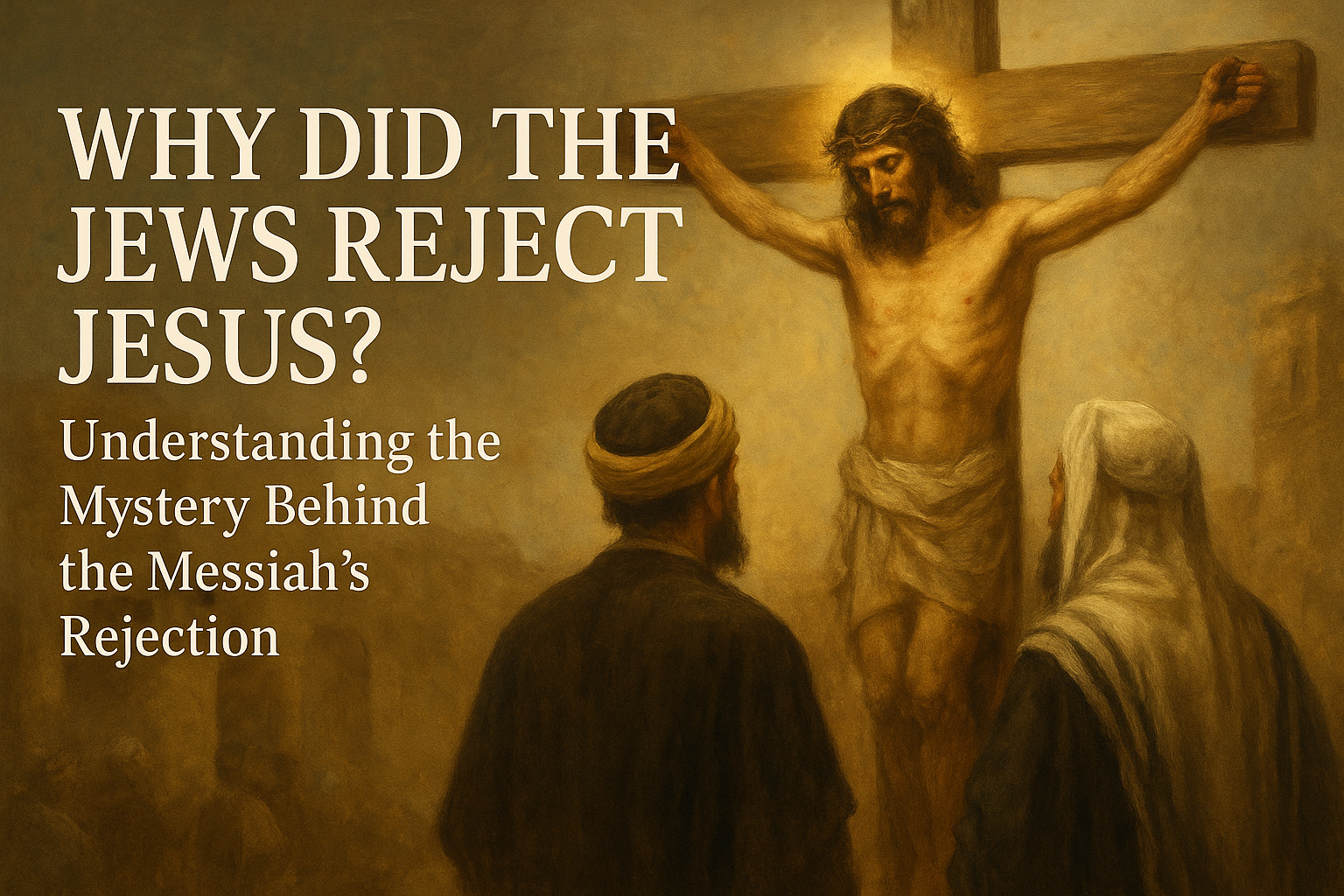
Understanding the Mystery Behind the Messiah’s Rejection
Introduction
“He came to His own, and His own did not receive Him.” (John 1:11)
This statement from the Gospel of John reveals one of the most painful mysteries in the Christian story. Jesus Christ — the long-awaited Messiah foretold by the prophets — was rejected by many of His own people. But why?
Why would those who spent centuries praying for the coming of the Savior turn away when He finally appeared? Was it a misunderstanding, pride, fear, or something deeper woven into the divine plan of salvation?
This article seeks to explore the historical and theological reasons for this rejection — not as a judgment against the Jewish people, but as an invitation to reflect on the mystery of God’s timing, the fulfillment of prophecy, and the formation of the Church.
The Jewish Expectation: A Political Messiah
In the first century, the Jewish people were living under Roman occupation, facing oppression, heavy taxation, and the loss of national identity. Amid this suffering, they clung to a promise: that God would send a Messiah, a descendant of King David, who would restore Israel’s glory.
Over time, this hope became strongly associated with a political and military figure — someone who would overthrow Rome, purify the Temple, and bring peace through strength. This image was deeply rooted in the interpretation of various Old Testament prophecies.
When Jesus appeared, however, He came not as a warrior, but as a teacher. He preached love for enemies, forgiveness of sins, and a kingdom “not of this world.” He did not conform to the messianic expectations of power and conquest, which led many to question, doubt, and ultimately reject Him.
Miracles and Opposition
Jesus performed countless miracles: restoring sight to the blind, healing the sick, raising the dead. These signs drew massive crowds, many of whom began to believe He truly was sent by God.
Yet, His growing influence also provoked fear and hostility among the religious elite. Pharisees, Sadducees, and temple authorities saw His popularity as a threat to their power and traditions. Even His miracles were sometimes dismissed — some accused Him of working through demonic powers (cf. Matthew 12:24).
One of the most striking examples is the resurrection of Lazarus. While many came to believe after witnessing it, the chief priests instead plotted to kill both Jesus and Lazarus (John 11:45–53). For them, Jesus represented not salvation, but disruption.
The Cross: A Stumbling Block
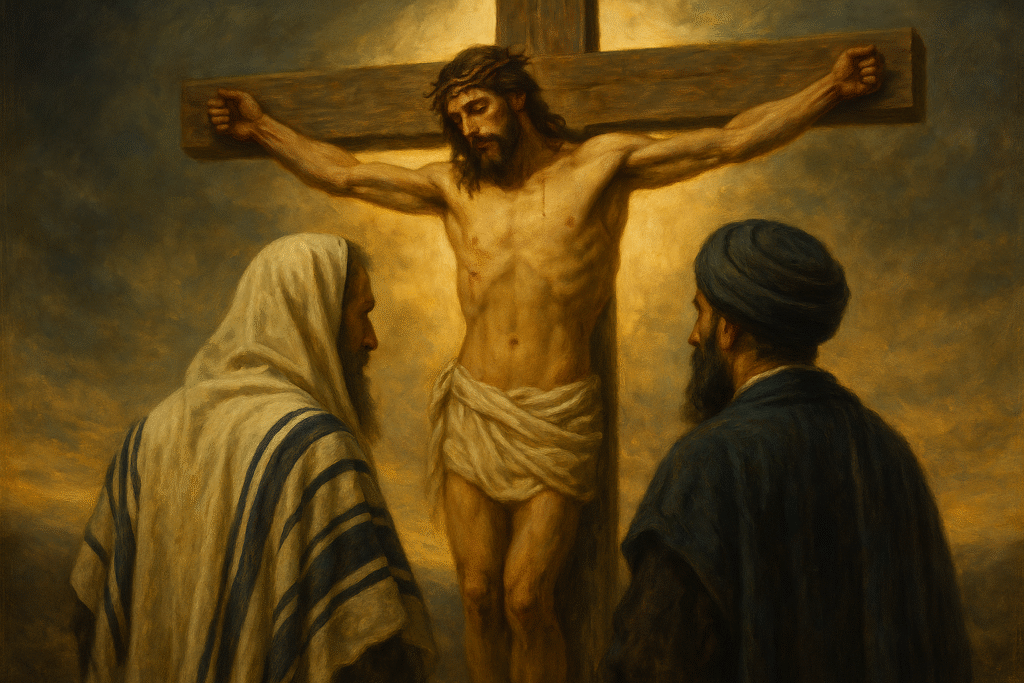
The crucifixion of Jesus became the greatest obstacle for many Jews. In their understanding, the Messiah was supposed to be victorious, not executed like a criminal. According to the Law, “cursed is anyone who hangs on a tree” (Deuteronomy 21:23). How could God’s chosen one end His life in such disgrace?
To many, the cross was proof that Jesus was not the Messiah. But in the Christian understanding, this very moment became the heart of salvation. The suffering and death of Jesus were not the failure of His mission — they were its fulfillment.
Through the cross, Jesus took upon Himself the sin of the world. He redefined victory — not through domination, but through sacrificial love.
The Birth of the Church and the New Covenant
After the resurrection, the apostles — all of them Jewish — boldly proclaimed Jesus as the risen Lord. Thousands believed, and the early Church was born within the Jewish world.
As the Gospel spread, it began to reach Gentiles as well. This raised important questions about the role of the Law of Moses. At the Council of Jerusalem (Acts 15), the apostles discerned that salvation came through grace and faith in Jesus — not through the full observance of Mosaic law. Gentiles were welcomed into the New Covenant without the need to become Jews first.
This marked a turning point. Christianity began to take shape as a distinct movement, rooted in Jewish tradition but open to all nations. Many Jewish leaders saw this as heresy, and the divide between synagogue and Church deepened.
👉 If you are inspired by stories of faith and transformation, we invite you to discover our e-book “50 Saints: Stories and Prayers for Divine Intervention.”
It features powerful lives and devotions from saints across the centuries. Find it in the Catholic Journey shop.
A Rejection That Holds a Promise
While many Jews rejected Jesus, many others believed — including the apostles, Mary, and thousands in the early Church. The rejection was not total, nor was it final.
Saint Paul, in his letter to the Romans (chapters 9–11), reflects deeply on this mystery. He sees in Israel’s rejection a purpose: the Gospel would now reach the Gentiles. But he also holds a profound hope: that one day, “all Israel will be saved” (Romans 11:26). The rejection was not a cancellation of the covenant, but a pause in its fulfillment.
The Church teaches that the Jewish people remain God’s chosen people, and that their vocation is still alive. The Catechism (paragraphs 839–840) affirms the unique role of Israel in salvation history and warns against any form of anti-Semitism or blame.
Conclusion: From Rejection to Redemption
The rejection of Jesus by many of His contemporaries is a real and painful part of Christian history. But it is also filled with mystery and hope.
The stone the builders rejected has become the cornerstone (Psalm 118:22). From that rejection, God built something new — a Church that now embraces every tribe and tongue.
As Catholics, we are called not to judge the Jewish people, but to recognize our shared roots, to pray for unity in truth, and to trust in the wisdom of God’s plan. What began in sorrow will, one day, end in joy.
Until then, we walk in faith, remembering that every closed door in human history can become, by grace, an open gate to heaven.
To see how these questions were tested in the twentieth century, read about Pope Pius XII in dark times.