
Thérèse of Lisieux entered a Carmelite convent at 15 and died there at 24. She led no armies, founded no order and wrote no treatise. On October 19, 1997, Pope John Paul II named her a Doctor of the Church, the youngest ever given that title.
How does a hidden life like that end up beside Augustine and Aquinas? The answer is in the Church’s own documents, and it is simpler, and more demanding, than the pious postcard version of her.
A note on sources: the dates and quotations below come from John Paul II’s apostolic letter Divini Amoris Scientia (1997). Where this article goes beyond that text, it says so.
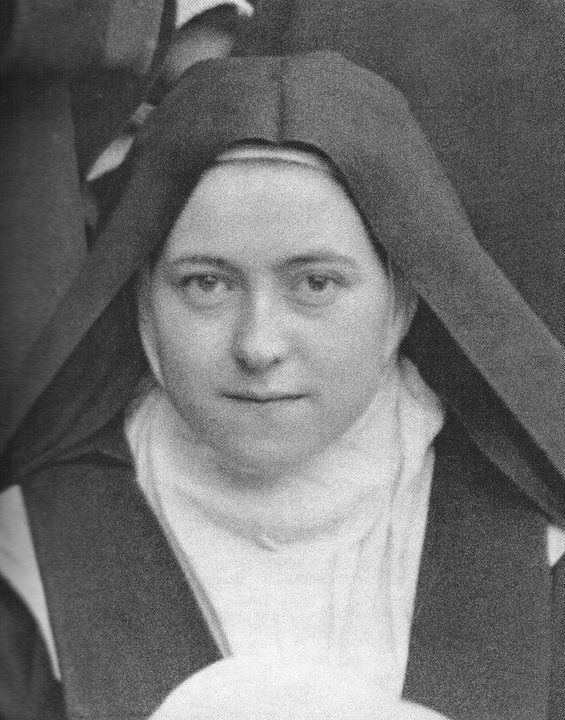
A Short Life in Dates
Born January 2, 1873, in Alençon, France, and baptized two days later. Her mother died on August 28, 1877, and the family moved to Lisieux. She made her First Communion on May 8, 1884. On April 9, 1888, she entered the Carmel of Lisieux, at 15. She professed vows on September 8, 1890. On the afternoon of September 30, 1897, she died. Her last words, as the Pope’s letter records them: “My God, I love you.”
That is nearly the whole outer story. Nine years in one house.
The Book That Made Her Known
A year after her death, in 1898, her autobiography appeared as Histoire d’une Âme, Story of a Soul. It was not written as a work of theology. It is a memoir of a young nun, and it traveled far beyond Lisieux. The Church moved quickly: Pius XI beatified her on April 29, 1923, and canonized her on May 17, 1925, less than 28 years after her death. In 1927 he declared her, alongside St. Francis Xavier, patron of the missions, though she never left France.
What Is the “Little Way”?
Her teaching is called the “little way,” or spiritual childhood. John Paul II describes it as the Gospel path of holiness, open to everyone and not only to the heroic. Her insight was that you do not need to do great things to belong to God. You need to do ordinary things with love, and to trust him as a child trusts a parent.
On June 9, 1895, she made what she called her Offering to Merciful Love. It is the center of her spiritual life, and the reason the Pope’s letter bears the title it does: Divini Amoris Scientia, “the science of divine love.”
Why a Doctor of the Church?
A Doctor of the Church is a saint whose teaching the Church recognizes as a guide for everyone. The title does not mean the saint wrote the longest books. John Paul II’s letter presents Thérèse as a teacher of the heart of the Gospel: that God’s mercy reaches the smallest, and that holiness is not reserved for the strong. She is the youngest Doctor, and the closest to us in time.
It is also fitting that she was a woman who never held a pulpit. The title says that Christ’s teaching can be lived out in a kitchen, an infirmary or a cloister, and taught from there.
Did She Think Death Was the End?
The Pope’s letter quotes a line she wrote to Fr. Bellière: “I am not dying; I am entering life.” It is not the sentence of someone with a gentle, sentimental faith. She chose to say that death was a door.
One thing to do this week
Pick one small task you usually do on autopilot: washing dishes, answering an email, waiting in a line. For seven days, do it on purpose, and offer it for one person by name. That is the little way in its plainest form.
If stories like this one stay with you, there are fifty more in 50 Saints: Stories and Prayers for Divine Intervention — fifty lives from across the history of the Church, each paired with a prayer. Find it in the Catholic Journey shop.
Sources
- Tier 1: Saint John Paul II, Apostolic Letter Divini Amoris Scientia, October 19, 1997 (vatican.va): the dates of her life, canonization, patronage and the title of Doctor of the Church.
Image credits
- Thérèse of Lisieux, photograph by Céline Martin. Public domain, via Wikimedia Commons.
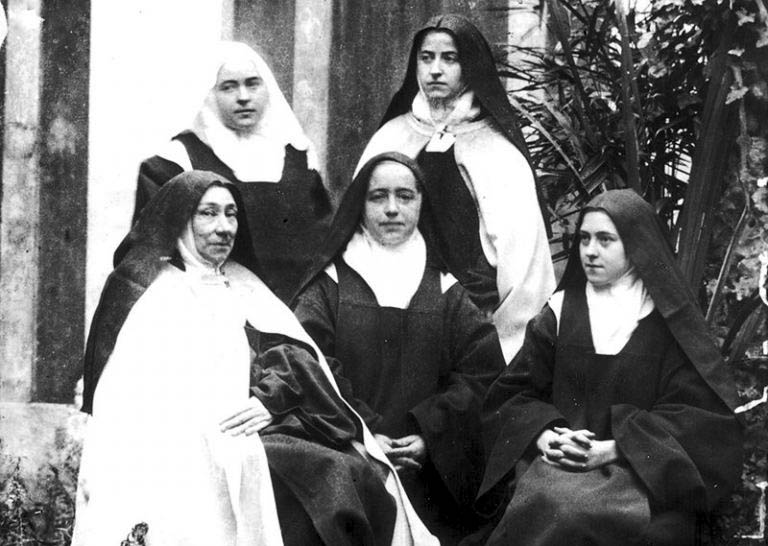
- Thérèse and other nuns at Carmel, c. 1894, Céline Martin. Public domain, via Wikimedia Commons.