
Around the year 1205, a rich cloth merchant’s son knelt before a crucifix in a ruined church and heard it speak. Within a few years he had given up his inheritance in front of the bishop of Assisi, and within twenty he was dead on the bare floor of a chapel. Francis of Assisi is one of the most loved saints, and one of the most softened. The birds and the garden have crowded out the man.
This article sticks to what the Church’s own documents say. The facts below come from Pope Benedict XVI’s General Audience of January 27, 2010, and from Pope Francis’s encyclicals Laudato Si’ and Fratelli Tutti and his letter Admirabile Signum.
From Cloth Merchant’s Son to Prisoner
Francis was born in Assisi in late 1181 or early 1182 to a wealthy family of cloth merchants. At about 20 he was taken prisoner in a military campaign, then fell ill. According to Benedict XVI, that is where the turning began: slowly, he walked away from his worldly life. Dante would later write that “a sun was born into the world.”
“Repair My Church in Ruins”
About 1205, in the church of San Damiano, the crucifix spoke to him three times: “Go, Francis, and repair my Church in ruins.” The task was larger than stone and mortar.
His father, Bernardone, objected to how freely he gave to the poor. Francis answered by taking off his clothes in front of the bishop of Assisi and renouncing his inheritance.
Rome Listens
In 1209, Francis went to Rome to propose a new way of living the Gospel to Pope Innocent III, who welcomed him. Benedict XVI’s text says the Rule was approved by “the Pope” and does not go further, so this article does not either. In 1218 Honorius III’s bull Cum Dilecti supported the Friars Minor.
The Crib at Greccio
Pope Francis’s letter Admirabile Signum tells the story of Christmas 1223. The letter says Francis had received confirmation of his Rule from Honorius III on November 29, 1223, and stopped at Greccio near Rieti. Fifteen days before Christmas, he asked a local man named John to help him bring to life the memory of the babe born in Bethlehem, citing Thomas of Celano. On December 25, friars and villagers came with flowers and torches. There was a manger, hay, an ox and a donkey, and a priest celebrated the Eucharist over the manger. There were no statues: the scene was lived by the people present.
That is the origin of the Christmas crib.
The Sultan
In 1219, Francis visited the Muslim sultan Malik al-Kamil to preach the Gospel, and was received courteously (Benedict XVI). In Fratelli Tutti, Pope Francis writes that Francis told his followers that among “Saracens and other nonbelievers” they should not “engage in arguments or disputes,” but be “subject to every human creature for God’s sake,” without giving up their own identity. The encyclical calls this an extraordinary recommendation for the age of the Crusades.
La Verna, 1224, and a Death on the Floor
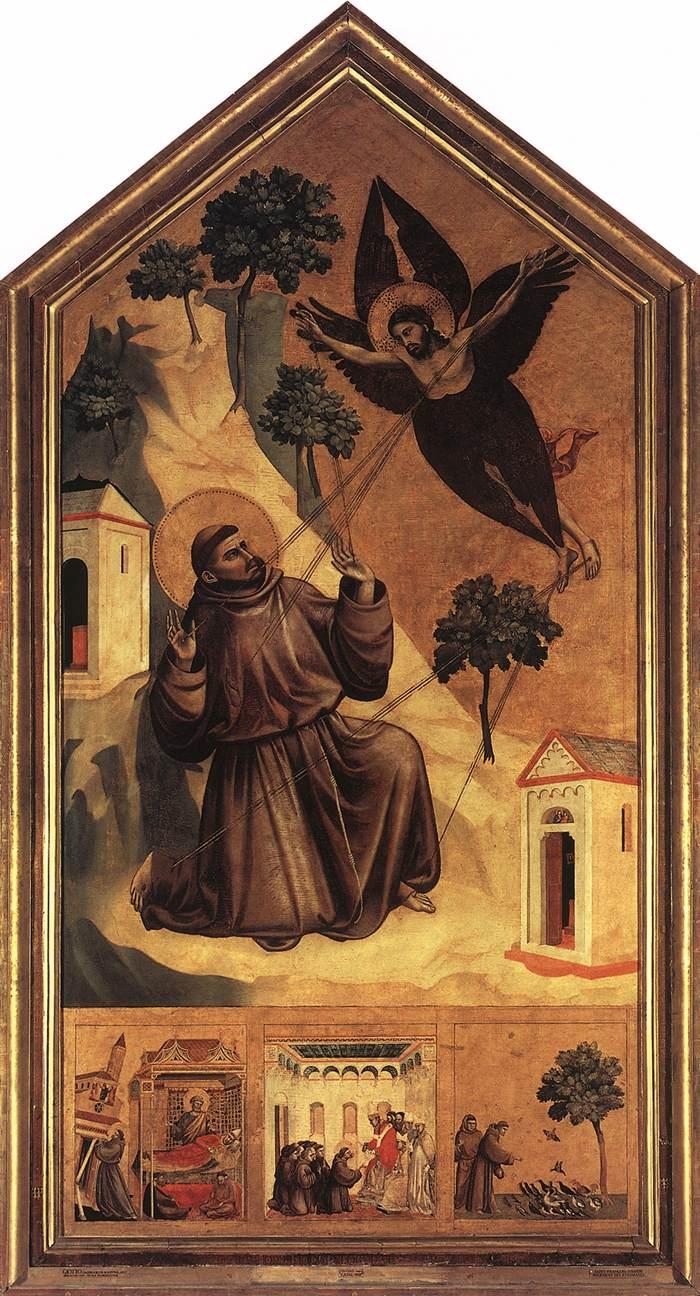
In 1224, at La Verna, Francis had a vision of the Crucified Lord in the form of a seraph and received the stigmata, according to Benedict XVI. Two years later, on the evening of October 3, 1226, he died at the Portiuncula, lying on the bare earth. Pope Gregory IX enrolled him among the saints in 1228.
The Church records the stigmata as part of his life. This article adds no medical claims, because none of the sources above make them.
Why the Garden Is Not a Detail
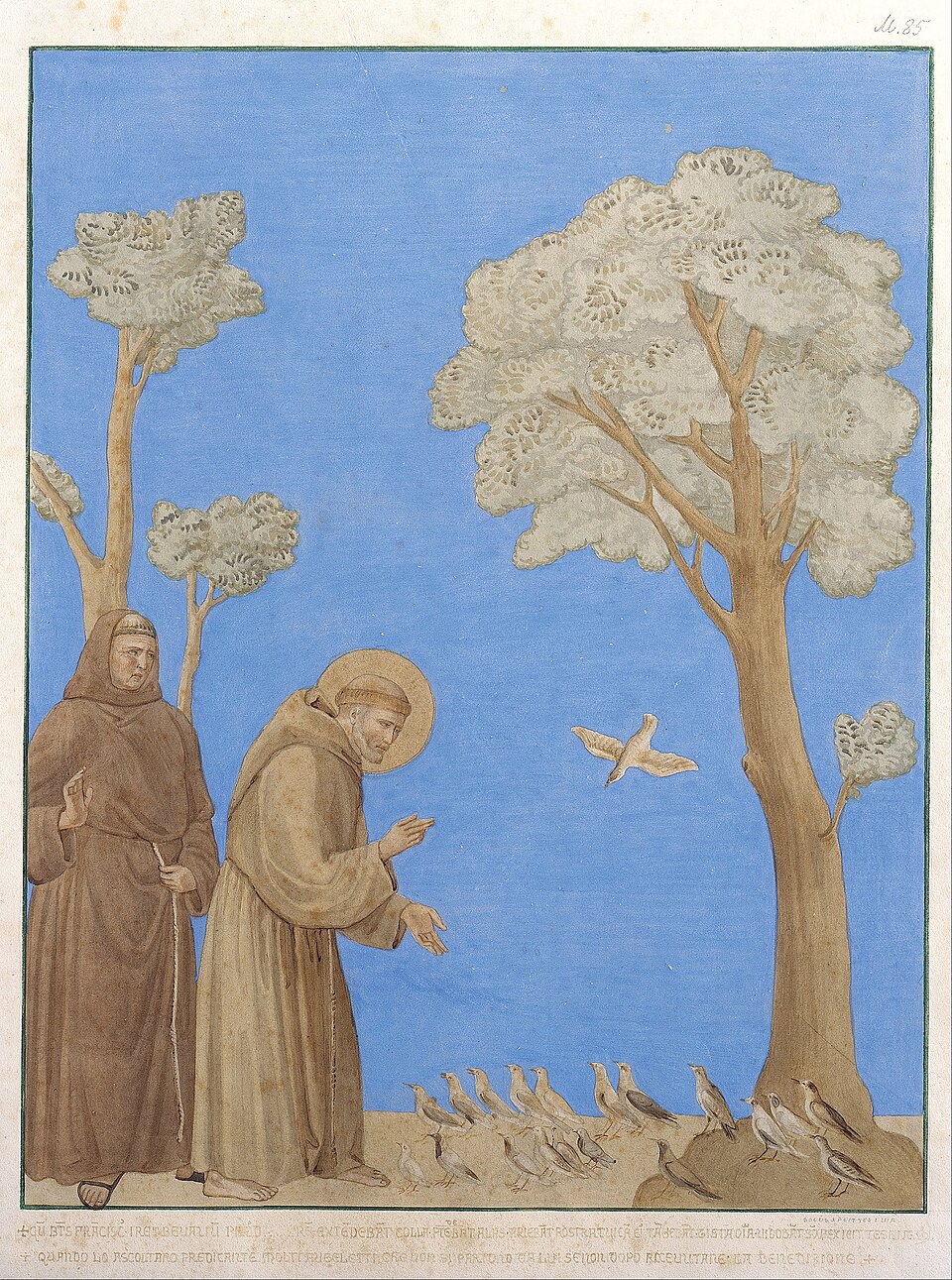
In Laudato Si’, Pope Francis calls him “the example par excellence of care for the vulnerable and of an integral ecology,” and says he addressed creatures as brother and sister. He asked that part of the friary garden be left untouched so wild plants could grow there. For Francis of Assisi, creatures were not decoration. They belonged to the same Father, and so did the sultan, and so did the poor.
One thing to do this week
Choose one person you avoid or argue with, and do the one thing Francis told his friars to do: refuse the quarrel and be good to them anyway. No speech. Just that, once a day, for seven days.
If stories like this one stay with you, there are fifty more in 50 Saints: Stories and Prayers for Divine Intervention — fifty lives from across the history of the Church, each paired with a prayer. Find it in the Catholic Journey shop.
Sources
- Tier 1: Benedict XVI, General Audience on Francis of Assisi, January 27, 2010 (vatican.va).
- Tier 1: Pope Francis, Apostolic Letter Admirabile Signum (Greccio, 1223); Fratelli Tutti, paragraphs 3-4 (the Sultan); Laudato Si’, paragraphs 10-12.
Image credits
- Giotto di Bondone, Stigmatization of St Francis. Public domain, via Wikimedia Commons.
- Johann Anton Ramboux, Saint Francis Preaching to the Birds. Public domain, via Wikimedia Commons.