
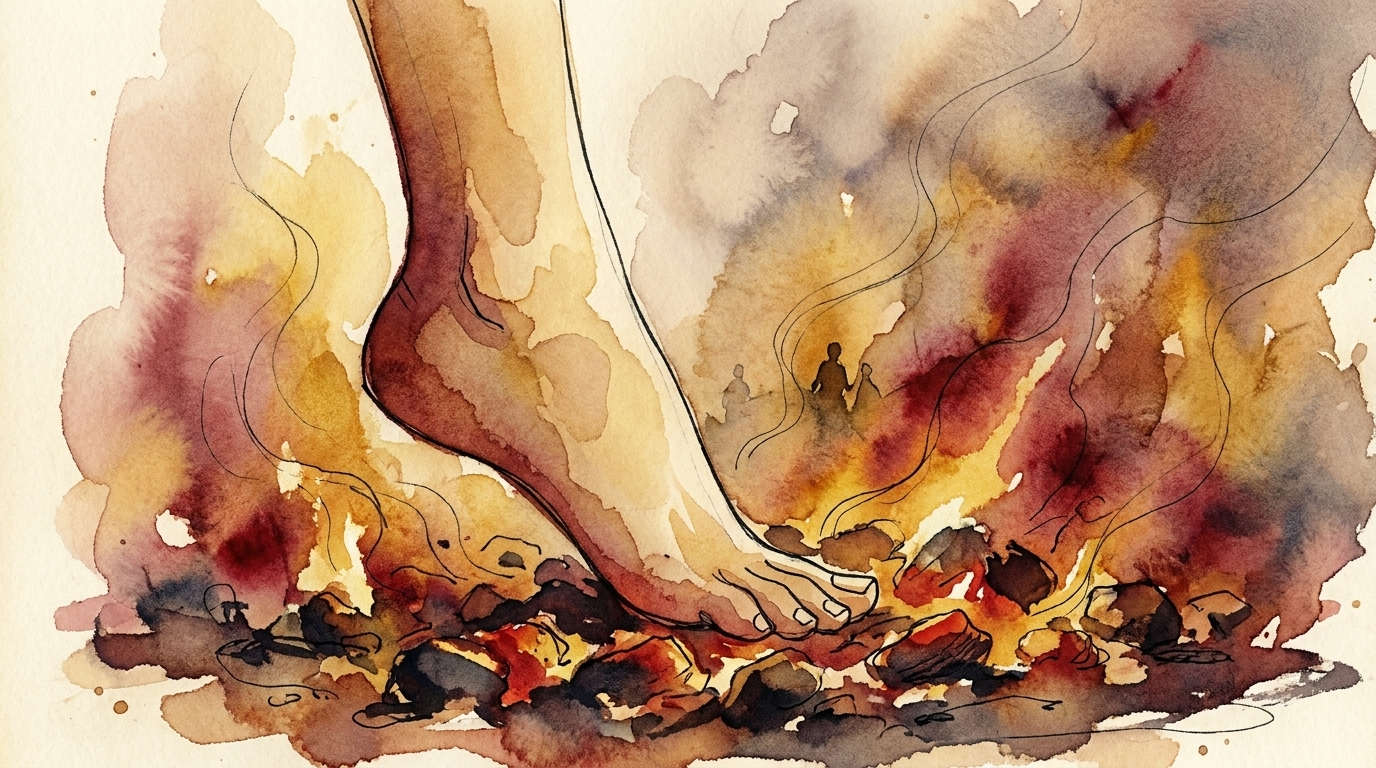
In a small convent town in Kerala, a thirteen-year-old girl once walked to a heap of burning coals and stepped in on purpose. She didn’t scream. She let her foot blister, then walked away limping, and never explained herself to anyone.
Her name was Anna Muttathupadathu. Decades later, Rome would call her the first canonized saint of India. Nobody watching her that day could have guessed it.
Born Into a Fixed Path
Anna was born prematurely in August 1910, after her mother was startled awake by a snake in her sleep. She arrived a month early. Her mother died three months later, and Anna was raised by an aunt in a household with fixed ideas about what a girl’s life should look like.
By her early teens, that future had exactly one shape: marriage. Her aunt had already begun arranging it, the expected path for a girl her age. But Anna wanted something her family hadn’t considered an option — to enter a convent and give her life to God instead. Her aunt refused to discuss it, and the marriage arrangements moved forward anyway, without asking the one person whose life it actually was.
The Fire That Changed Everything
So Anna made a choice nobody around her expected. A disfigured foot made her, by her family’s own logic, unmarriageable — and burning herself on purpose was enough to force the marriage talks to end.
It worked. In May 1927, she entered the Franciscan Clarist convent at Bharananganam, the life she had fought so hard to reach. A year later, beginning her postulancy, she took a new name: Alphonsa, after Saint Alphonsus Liguori, whose feast fell on the day she was received. She took the religious habit in May 1930 — on paper, her fight was over.
But the convent she had fought her whole family to reach was about to become the site of a very different battle.
The Illness Begins
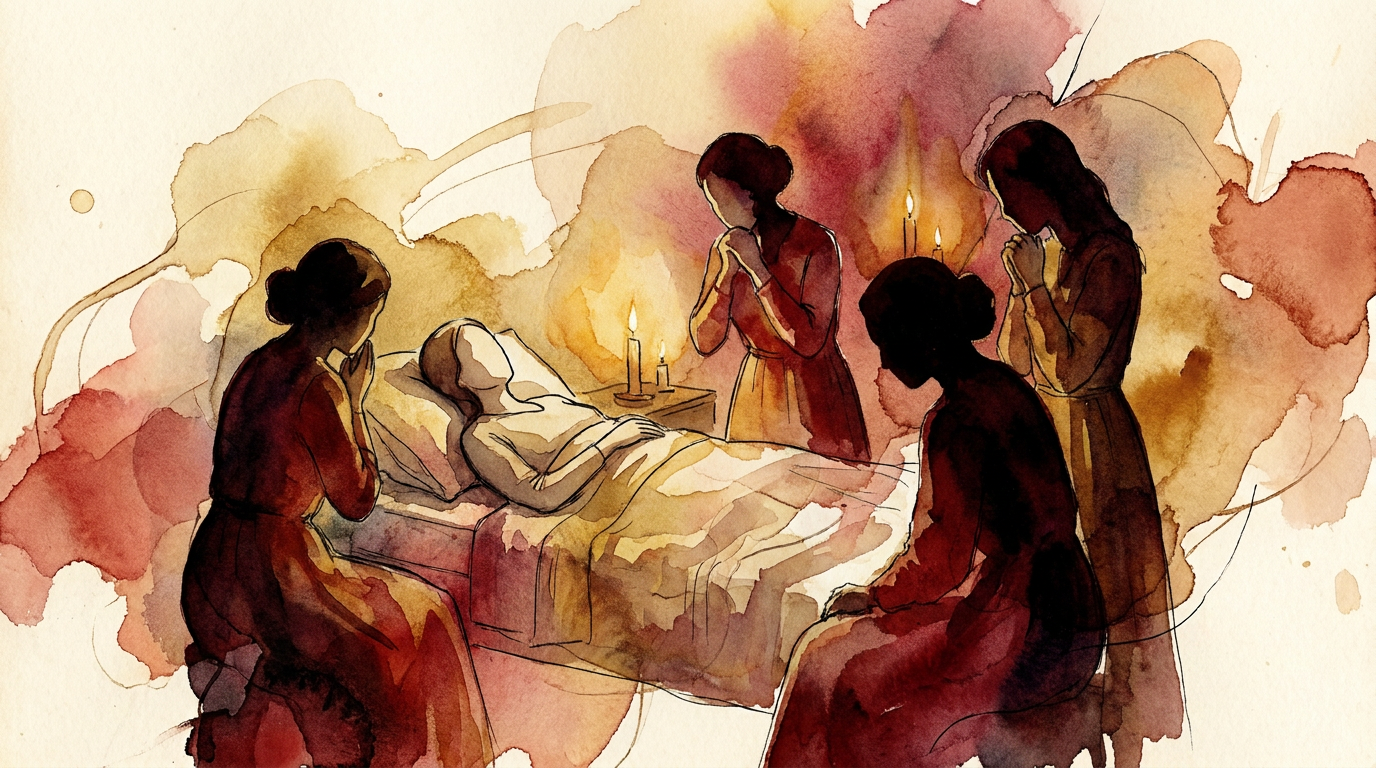
In August 1935, during her canonical novitiate, Alphonsa began hemorrhaging severely. Her body was visibly wasting in front of the other sisters, with no clear medical explanation and no clear path to recovery. The sisters turned to prayer — a novena asking the intercession of a priest not yet even beatified himself, Father Kuriakose Elias Chavara.
Alphonsa recovered suddenly, with no medical account for it. She later credited the cure directly to that novena. It was her first brush with death inside the convent walls. It was nowhere close to her last.
“A Day Without Suffering Is a Day Lost”
In August 1936, on the feast of Saint Clare, Alphonsa made her perpetual profession. She wrote afterward that she felt entrusted with “a part of the cross of Christ” — she meant it as her calling, not a complaint.
Pope Benedict XVI later said, at her canonization, that Alphonsa was convinced her cross was the very means of reaching heaven. This is the Church’s own account of her holiness: a sanctity built almost entirely on how she carried suffering, not on any public ministry or writings.
The suffering kept arriving. Soon after her vows, typhoid fever put her back in bed, followed by double pneumonia. She once wrote a line that Rome would quote at her canonization more than seventy years later: “I consider a day without suffering as a day lost.”
More than anything, she wanted to teach children. She trained as a schoolteacher and was assigned to a classroom in Vakakkad — but illness pulled her out again and again, until even that small, ordinary ambition became impossible.
The Year That Should Have Broken Her
In 1940, a nighttime intruder broke into the convent, and the shock left Alphonsa in what the record describes as severe psychic distress — for a period she could barely function, mentally or physically.
By 1945, her body had run out of new ways to fail her, so it started repeating the worst of them at once: a tumor, gastroenteritis, violent convulsions. On July 28, 1946, at the convent in Bharananganam, Alphonsa of the Immaculate Conception died. She was 35 years old.
That should have been the quiet end of a quiet story in a small convent in Kerala. Instead, it’s where the real story starts.
From a Small Convent to Saint Peter’s Square
Devotion to Alphonsa spread quickly across Kerala, built on ordinary people crediting her intercession — especially for children born with twisted or clubbed feet. In 1953, the Diocese of Palai opened a formal investigation, declaring her a Servant of God.
Pope John Paul II declared her Venerable in July 1985, and beatified her seven months later at a stadium in Kottayam. Two separate healing cases eventually reached the Congregation for the Causes of Saints, both involving children whose legs were cured through her intercession. Historical accounts don’t fully agree on every detail of which case closed which stage of her cause — a point the Church itself has never resolved with false precision. What is settled is that the miracle formally approved for her canonization was the healing of an infant’s clubbed foot, recorded in 1999.
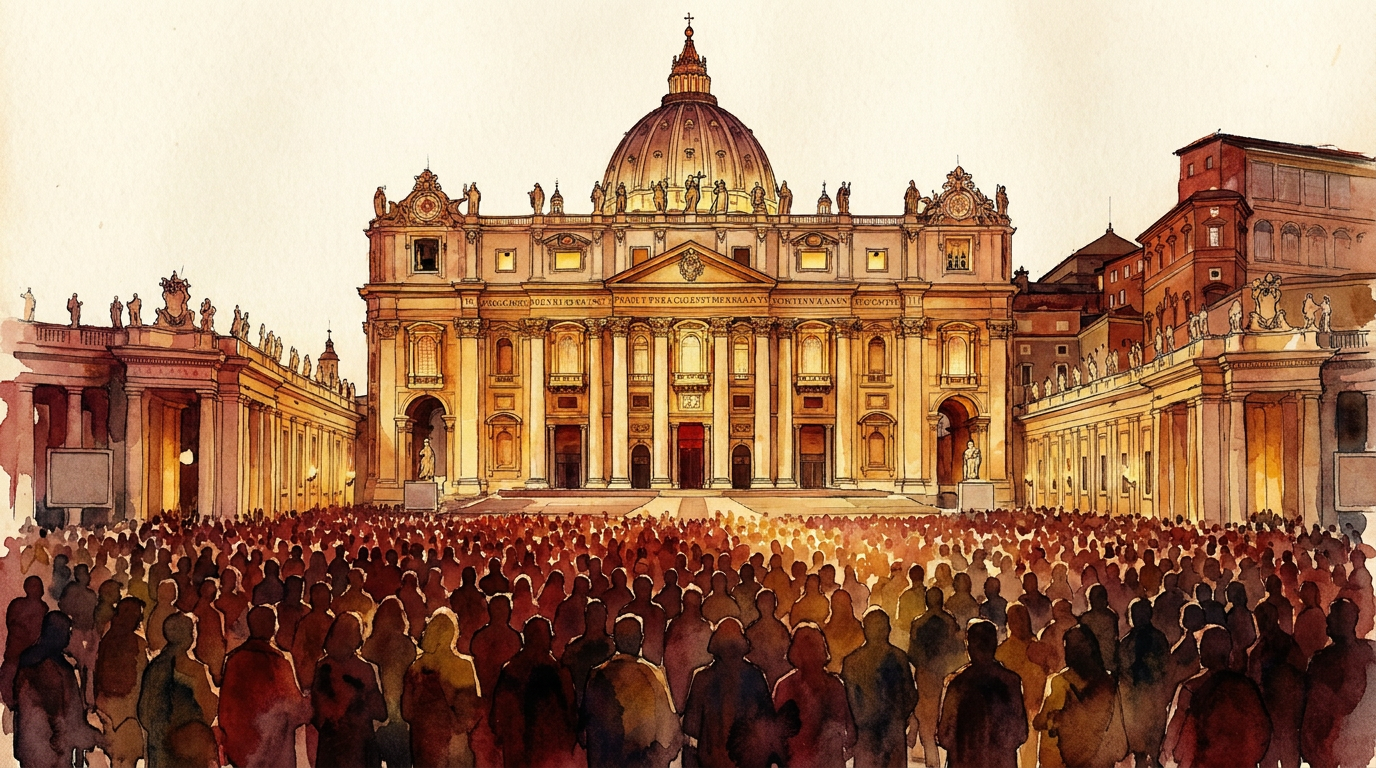
On October 12, 2008, Pope Benedict XVI canonized her in Saint Peter’s Square, alongside three other new saints. Around 35,000 people attended, including roughly 300 sisters of her own Franciscan Clarist congregation and official delegations from the Indian government. The prefect overseeing her cause called her, that day, “the great little daughter of India.”
The Foot, Twice
The most striking detail that day was standing in the crowd. His name was Jinil — born with twisted legs, brought to her shrine in 1999 as a small child. After prayers at Bharananganam, his legs straightened. That healing became the very miracle that made his benefactor a canonized saint nine years later. At the canonization, an eleven-year-old Jinil stood in Saint Peter’s Square on legs that had once, at birth, been twisted the wrong way entirely.
More than eighty years earlier, a thirteen-year-old girl had ruined her own foot on purpose, to escape a life she didn’t want. The saint the Church built around her afterward is remembered, in the end, by a boy’s legs healed rather than a girl’s foot broken — the same part of the body, pointed in the opposite direction.
Her Legacy Today
Her official feast is July 28, the day she died. In Bharananganam, a nine-day novena still leads up to it every year, and her own line still gets quoted there more than any other of her words: a day without suffering is a day lost.
If stories like this one stay with you, there are fifty more in 50 Saints: Stories and Prayers for Divine Intervention — fifty lives from across the history of the Church, each paired with a prayer. Find it in the Catholic Journey shop.
Sources
- Tier 1: Pope Benedict XVI, canonization homily, October 12, 2008
- Tier 1: Holy See, official biography of Alphonsa of the Immaculate Conception (1910–1946)
- Tier 1: Pope John Paul II, beatification homily, Kottayam, February 8, 1986
- Tier 2: New World Encyclopedia, “Saint Alphonsa Muttathupadathu”
- Tier 2/3: Catholic Online, “Saints & Angels”
- Tier 3: UCA News / National Catholic Reporter, “Indian Catholics cheer their new saint,” October 13, 2008
- Tier 3: St. Alphonsa Shrine & Pilgrim Centre, Eparchy of Palai — Miracles
- Tier 3: St. Alphonsa Shrine & Pilgrim Centre, Eparchy of Palai — Feast/Events
- Tier 3: Manorama Online, feast-day coverage, Bharananganam, 2025–2026