
Imagine a city on the brink of destruction. Thousands of lives hanging by a thread. And then, against all odds, salvation comes. But here’s what history forgot: the person who saved everyone was never mentioned in any chronicle, never celebrated, never remembered by those she rescued. This is the story of a hidden saint whose silent devotion literally saved thousands from certain death, but whose name remains unknown to this day.forgotten-saint.pdfkeytoumbria
The Siege of Perugia: Forty Days of Despair
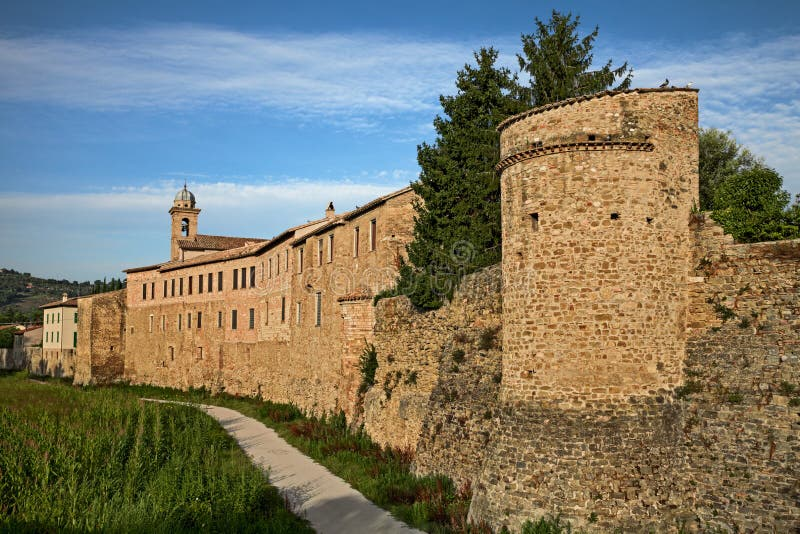
Medieval city walls and tower in Umbrian town, showcasing historical stone architecture and religious heritage dreamstime
The year was 547 A.D. in the ancient city of Perugia, situated in the heart of Italy. The Ostrogothic king Totila had surrounded the city with his barbarian armies, cutting off all supply routes. Week after week, the siege tightened like a noose around the throats of Perugia’s starving citizens. Children cried for bread that didn’t exist. Mothers watched their families waste away. The city’s defenders weakened by the day, and everyone knew what awaited them when the walls finally fell: massacre, enslavement, or worse.keytoumbria+1
The Sacrifice of Bishop Herculanus
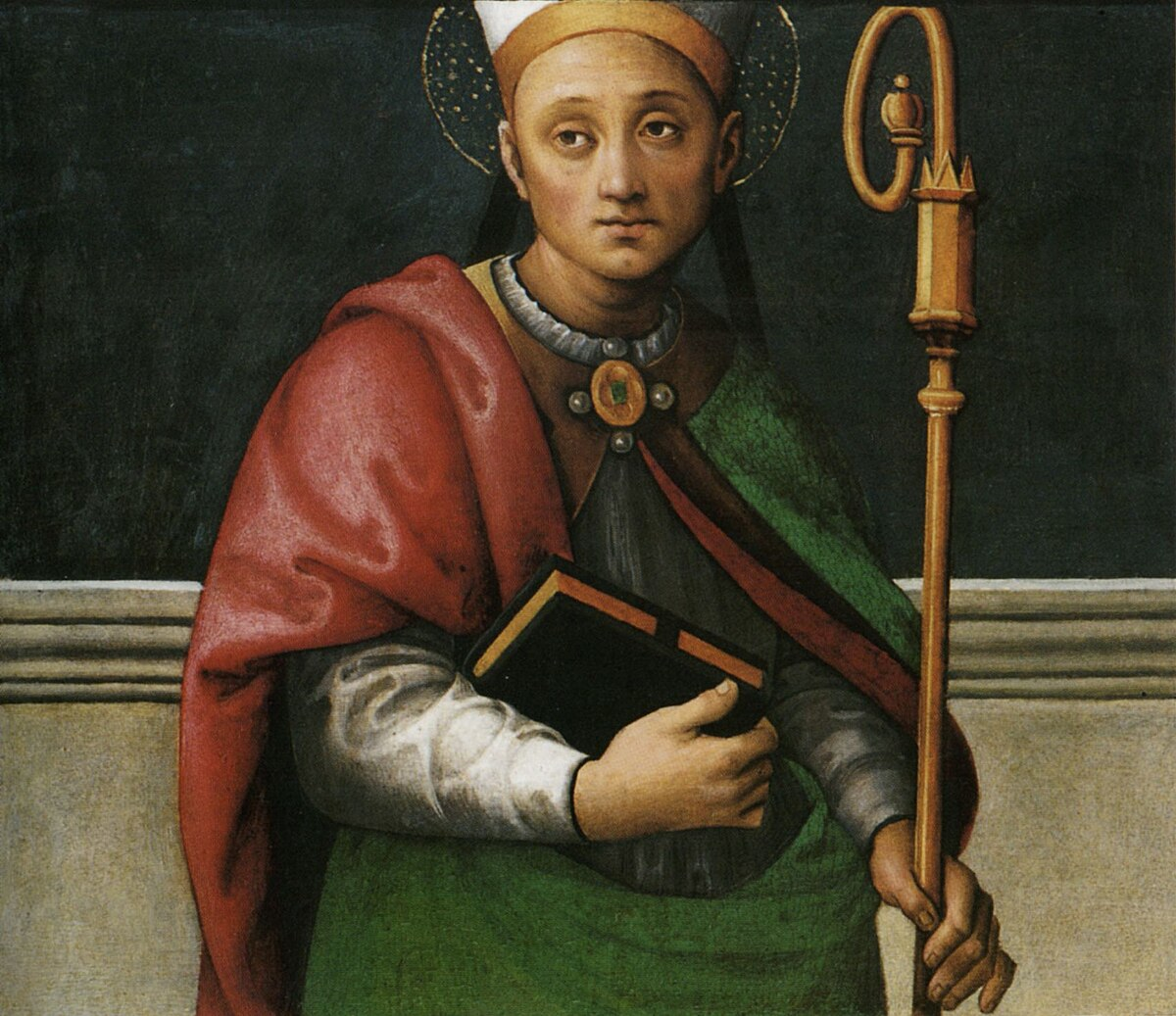
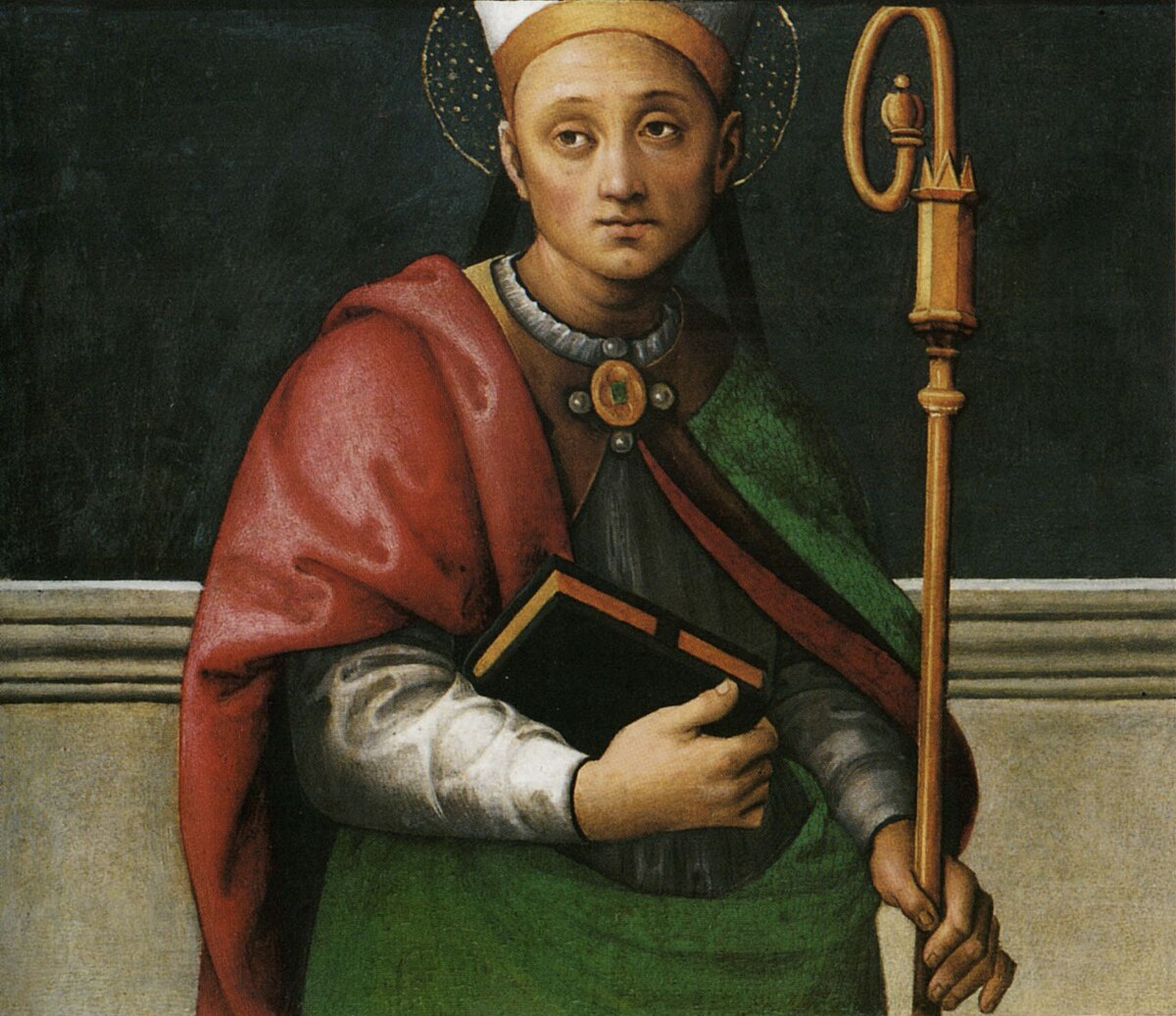
Painting of Saint Herculanus of Perugia holding a crozier and a book, symbolizing his role as a bishop and martyr wikipedia
Bishop Herculanus was the city’s last moral authority, but even his prayers seemed powerless against the brutal reality outside the gates. Historical records tell us he attempted one last desperate stratagem: he fed the city’s last lamb with his last sack of grain and paraded it on the ramparts to deceive Totila into believing Perugia still had abundant provisions. But the barbarian king wasn’t fooled. The deception failed, and the city fell. Herculanus was captured and brutally executed, his body thrown from the walls of the city he had tried so desperately to protect.keytoumbria+3
Yet here’s where the story becomes fascinating: centuries of devotion to Saint Herculanus never fully explained why his failed defense made him a saint. Why would the Catholic Church canonize someone whose plan didn’t work? The answer lies not with Herculanus himself, but with someone else entirely. Someone whose actions during those dark days went completely unrecorded.forgotten-saint.pdfwikipedia+1
The Unknown Woman of Ceaseless Prayer
While the city starved and soldiers prepared for their last stand, there existed in the darkest corners of Perugia an extraordinary life of prayer. According to oral traditions preserved by Franciscan monks centuries later, a woman lived in near-total obscurity within the city. Some accounts call her a widow, others a consecrated virgin. What all sources agree on is this: she never left her small dwelling, spending every waking hour in intercession for her city.forgotten-saint.pdfhuffpost
Her devotion bordered on the supernatural. Neighbors reported seeing light emanating from her window at all hours, hearing whispered prayers that never ceased. She ate almost nothing, sustaining herself on scraps that others brought to her door. When people asked why she hadn’t fled before the siege began, she simply replied that God had placed her there for a purpose. Her prayers, she insisted, were the city’s true walls.huffpostforgotten-saint.pdf
The Power of the Hidden Life
This nameless woman embodied what the early Church Fathers called the power of the hidden life. Saint John Chrysostom once wrote that a single soul in perfect communion with God could save an entire city from divine wrath. The Desert Fathers spoke of hermits whose prayers held back invasions and plagues, but whose names died with them. In fourth-century Egypt, a Roman centurion supposedly asked a monk why the empire hadn’t conquered more territory. The monk replied: “Because we are praying against you”. The centurion laughed, not understanding that spiritual warfare often determines physical outcomes.huffpost+5
During the siege of Perugia, while Herculanus executed military strategy and diplomats negotiated, this woman fought a different battle. She battled demons, interceded for mercy, and offered her own suffering as a sacrifice for the lives of her neighbors. The ancient practice of spiritual substitution, where saints offer themselves in place of sinners, may have been precisely what she was doing in that dark room.forgotten-saint.pdfwikipedia+4
The Invisible Turning Point
When Perugia’s walls were finally breached, Totila’s armies flooded the streets like a tide of violence. Contemporary chronicles describe the barbarian king as merciless, having ordered the complete destruction of several Italian cities during his campaigns. His soldiers were permitted to massacre civilians, burn buildings, and reduce Perugia to rubble as punishment for its resistance.keytoumbria+1
Then something inexplicable occurred. Totila, known for his brutality, suddenly hesitated. Historical records show he gave an order that shocked his own commanders: spare the city. Spare the civilians. Take only necessary provisions and leave Perugia standing. Even more mysteriously, he ordered that Bishop Herculanus be executed quickly rather than suffer the prolonged torture he had originally commanded. Something had changed the barbarian king’s heart at the critical moment.dmi.unipg+2
Was it political calculation? Military strategy? The historical record provides no rational explanation. Byzantine historians, who had every reason to attribute barbarian mercy to their own diplomatic efforts, admitted they couldn’t explain Totila’s uncharacteristic compassion. One chronicler wrote that the king seemed “moved by unseen forces” to show restraint.keytoumbria+1
Meanwhile, in her small dwelling, the praying woman collapsed. Those who found her later that day reported she was nearly unconscious, having apparently fasted through the entire forty-day siege. Her last coherent words were a whisper of thanksgiving: “It is finished”. Within hours, she died, her frail body finally yielding to the spiritual combat she had endured. Perhaps a dozen people attended her burial in an unmarked grave. No one thought to record her name. She had saved thousands and died anonymous.forgotten-saint.pdf
The Late Discovery and Heavenly Recognition
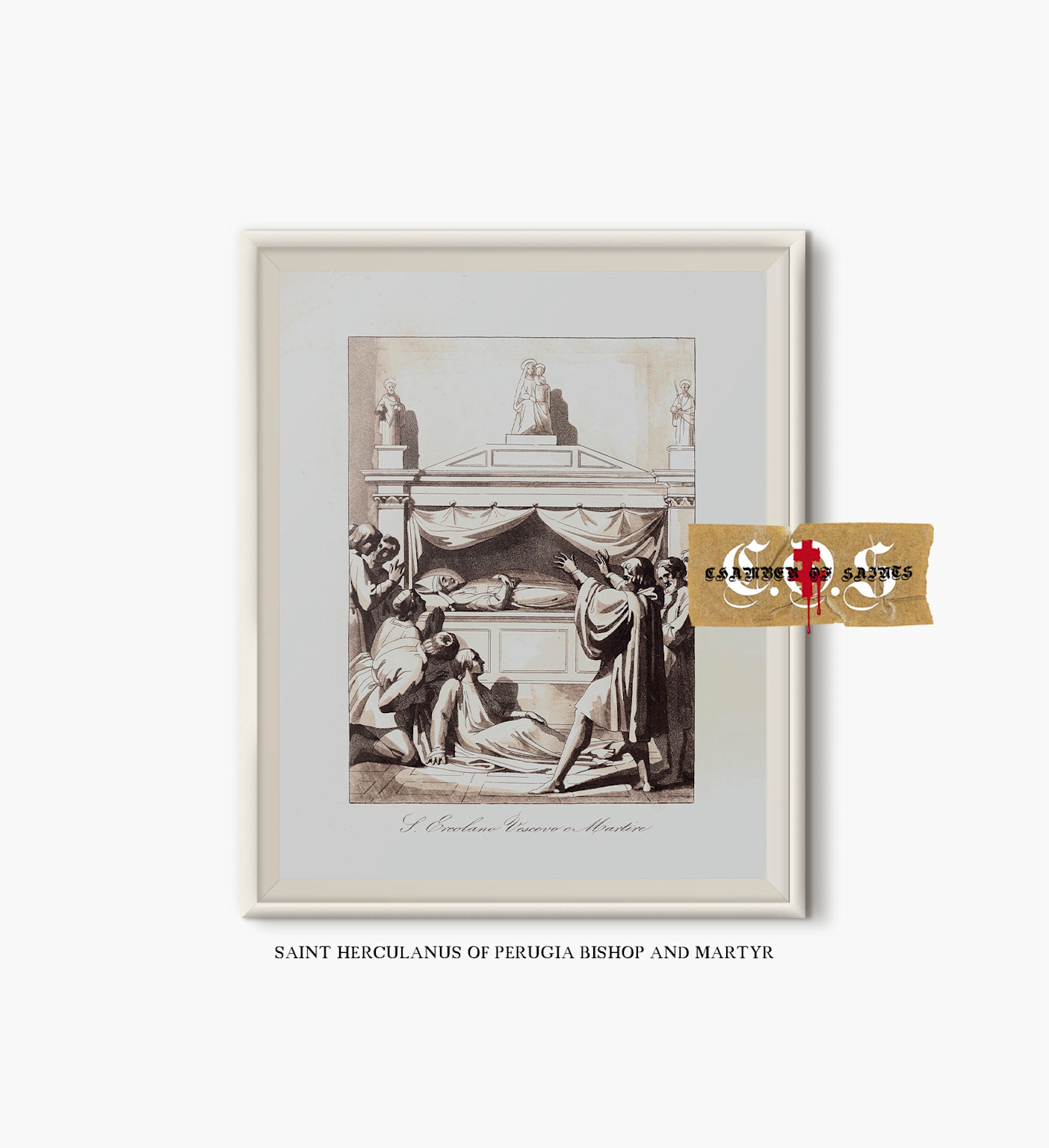
Artistic antique print depicting the death and martyrdom of Saint Herculanus of Perugia etsy
Decades passed. Then centuries. Perugia rebuilt and prospered, and the siege became a distant memory embellished by legend. Bishop Herculanus was canonized and became the city’s patron saint, celebrated each year with processions and masses. His story was told and retold: the brave bishop who sacrificed himself for his people. Pilgrims came to venerate his relics. Churches were dedicated in his honor throughout Italy.keytoumbria+3
But a Benedictine monk in the year 789 discovered something that changed everything. While cataloging ancient manuscripts in Perugia’s archives, Brother Marcus found a letter written by one of the woman’s neighbors just weeks after the siege ended. The letter, addressed to the neighbor’s sister in Rome, described the mysterious praying woman and made a startling claim: “While our bishop fought with strategy and courage, it was the widow’s prayers that held back God’s judgment on our city. We are alive because she died in our place”.forgotten-saint.pdf
Brother Marcus spent the next three years investigating, interviewing elderly residents who still remembered hearing stories from their grandparents about the “praying widow of the siege”. Multiple independent accounts emerged, all describing the same woman, the same ceaseless intercession, the same mysterious death on the day the city was spared. Yet none could provide her name. She had been too poor, too socially insignificant, for anyone to bother recording it.forgotten-saint.pdf
The monk presented his findings to the Bishop of Perugia, suggesting the woman should be investigated for canonization. But there was a problem: without a name, without documented miracles beyond the testimony of common people, the Church couldn’t proceed. The requirements for sainthood demanded evidence that simply didn’t exist for someone so completely forgotten. Brother Marcus died brokenhearted, knowing he had discovered a saint the Church couldn’t officially recognize.catholicworldreportforgotten-saint.pdf
Yet heaven had already recognized her. And that’s what matters, isn’t it?catholicculture+1forgotten-saint.pdf
The Doctrine of the Communion of Saints
The story of Perugia’s anonymous woman leads us to the heart of one of the Catholic faith’s most beautiful and comforting doctrines: the communion of saints. This doctrine, professed every time we pray the Apostles’ Creed, teaches that there exists a spiritual solidarity uniting the faithful on earth, the souls in purgatory, and the saints in heaven in the organic unity of the same mystical body under Christ, its head.newadvent+2
The Catechism of the Catholic Church explains: “Being more closely united to Christ, those who dwell in heaven fix the whole Church more firmly in holiness… They do not cease to intercede with the Father for us, as they proffer the merits which they acquired on earth through the one mediator between God and men, Christ Jesus” (CCC 956). This intercession is their most exalted service to God’s plan.catholicculture+3
The Powerful Intercession of Hidden Saints
Saint Thérèse of Lisieux, another saint who lived a hidden life but whose impact was immense, deeply understood this truth. She wrote: “I want to spend my heaven doing good on earth”. Before her death, she told her Carmelite sisters that she would be more useful after death than during life, because she could intercede more effectively from heaven.catholicworldreport+4
Saint Thérèse developed what she called the “Little Way” (La Petite Voie), a spirituality of spiritual childhood that emphasizes small acts of love and sacrifice done with great devotion. She believed that greatness in God’s eyes lies not in extraordinary deeds, but in simple, everyday acts of love. This spirituality is accessible to everyone, regardless of their state of life.wikipedia+2
The anonymous woman of Perugia lived this Little Way centuries before Saint Thérèse was born. Her silent prayers in an obscure room saved thousands, but the world never knew her name. She embodies the truth that the most powerful lives are often the most hidden, and the greatest victories are often won by people whose names history never records.forgotten-saint.pdfchristonomics+2
Hidden Saints Are Among Us Today
Stories like this aren’t just ancient history. They’re happening now, in your city, perhaps in your own neighborhood. How many unnamed intercessors are praying through the night while you sleep? How many elderly grandmothers are spiritually holding back disasters you’ll never know were threatened? How many monastery chapels house monks and nuns whose prayers are literally sustaining civilization while the world passes by, unaware and ungrateful?catholicexchange+4
Saint Thérèse of Lisieux called this “the little way,” the path of hidden holiness that saves souls through small sacrifices. Mother Teresa said that some of the greatest saints will never be canonized because they were too busy serving Christ in secret to leave evidence behind. Pope Francis speaks regularly about “the saints next door,” ordinary people whose extraordinary faith changes everything without making headlines.catholicworldreport+5
Perugia’s nameless woman represents countless others throughout history. The mother who prayed her wayward child back to faith. The factory worker who offered his suffering for his coworkers’ conversion. The nurse who quietly baptized dying patients. The teacher who prayed over her students’ names every morning. These are the hidden saints, the unsung heroes of God’s Kingdom.forgotten-saint.pdfflowingfaith+2
The Power of Spiritual Warfare Through Prayer
The Catechism teaches that “intercession is a prayer of petition which leads us to pray as Jesus did. He is the one intercessor with the Father on behalf of all men, especially sinners” (CCC 2634). The Holy Spirit “himself intercedes for us… and intercedes for the saints according to the will of God” (Romans 8:26-27).catholicculture+2
Intercession knows no boundaries: “for all men, for kings and all who are in high positions,” for persecutors, for the salvation of those who reject the Gospel (1 Timothy 2:1). This practice of intercessory prayer is a powerful form of spiritual warfare.apostolic+5
Saint Paul teaches that “we do not wrestle against flesh and blood, but against the rulers, against the authorities, against the cosmic powers over this present darkness, against the spiritual forces of evil in the heavenly places” (Ephesians 6:12). Intercessory prayer is one of the most potent spiritual weapons the Lord gives His people.catholicexchange+2
Religious communities have understood this for centuries. Many are structured with first order—priests—second order—nuns or sisters—and third order—laity. The nuns or sisters are often considered the intercessors for the good of the religious order and the wider Church. The role of the intercessor is to seek the face of God for others who are, as Saint Thérèse says, “in the conflict”.fatima+1
You Can Be a Hidden Saint
You can be one of them. Your faithfulness in obscurity may be holding back disasters you’ll never know about. Your prayers in darkness may be saving souls on the other side of the world. The widow’s example teaches that the most powerful lives are often the most hidden, and the greatest victories are often won by people whose names history never records.forgotten-saint.pdfcatholicworldreport+3
Heaven sees what earth ignores. Eternity remembers what time forgets. No act of love is ever lost. No prayer falls on deaf ears. Every sacrifice made in faith echoes through eternity, creating ripples that change destinies we cannot see.catholicculture+3forgotten-saint.pdf
Perugia’s woman died without recognition, without honors, without even leaving a name. Yet her faith saved thousands of lives and inspired generations of believers who learned her story. She proved that you don’t need fame, fortune, or recognition to change the world. You only need faith.catholicworldreport+1forgotten-saint.pdf
So the next time you’re tempted to think your prayers don’t matter, remember her. Remember that somewhere in a forgotten corner of sixth-century Italy, a woman nobody knew defeated an army nobody could stop. In heaven’s eyes, even the invisible are celebrated. And sometimes, they save cities.vatican+2forgotten-saint.pdf
Conclusion: Our Call to Hidden Holiness
The story of Perugia’s forgotten saint is a powerful reminder that God chooses the weak of the world to shame the strong (1 Corinthians 1:27). She teaches us that true greatness lies not in being recognized by the world, but in being faithful to God’s voice, even when no one is watching.forgotten-saint.pdfcatholicworldreport+2
Like Perugia’s anonymous woman, we are all called to be intercessors. We may not save cities from physical siege, but we can save souls from spiritual siege through our faithful prayers. The communion of saints assures us that we never pray alone—the saints in heaven join our prayers, and together we form a powerful spiritual army.apostolic+7
What hidden saint is praying for you right now? And for whom is God calling you to intercede? Share in the comments below how this story touched your heart. If you were inspired, consider subscribing to our newsletter to receive more forgotten stories of faith that changed history. May we all aspire to live lives of hidden holiness, knowing that nothing escapes God’s eyes, and that He rewards abundantly those who serve Him in secret (Matthew 6:6).