
Pick up a Catholic Bible and count the books: 73. Pick up a Protestant Bible and count again: 66. Seven books are missing — Tobit, Judith, Wisdom, Sirach (also known as Ecclesiasticus), Baruch, and 1 and 2 Maccabees — along with the Greek sections of Esther and Daniel. The Church read every one of them in worship for more than a thousand years before anyone objected. Most people assume Martin Luther deleted them in the 1500s. That isn’t what happened, and the real story is stranger.
Why Don’t the Two Bibles Match?
The Catholic position is straightforward: the list of 73 books was settled more than 1,100 years before Luther was born. The Councils of Hippo (393) and Carthage (393, 397, 419) fixed that list based on tradition and on what churches actually read aloud in the liturgy. In 405, Pope Innocent I sent a letter listing the same books, matching the Catholic canon exactly. The Council of Trent made that list binding in 1546 — it didn’t invent the canon, it confirmed what was already eleven centuries old.
So who removed the seven books? Not a council. Not a pope. Not even Martin Luther himself, as it turns out. The story starts in a crowded hall in Leipzig, Germany, on July 8, 1519, in an argument about purgatory.
What Actually Happened at Leipzig in 1519?
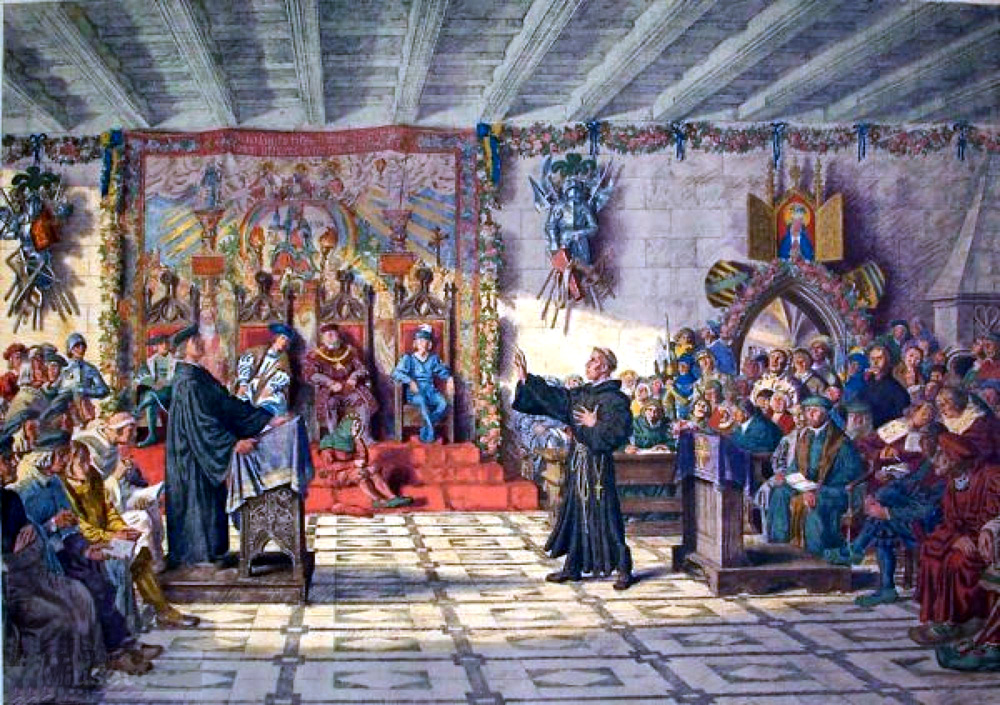
On one side stood Johann Eck, a Catholic theologian. On the other stood Martin Luther. Luther’s position was simple: if a doctrine can’t be proven from Scripture, it doesn’t bind the conscience of any Christian. So Eck reached for the one book that answered Luther directly — 2 Maccabees 12:44–46, the passage about praying for the dead — and offered it as scriptural proof of purgatory.
Luther didn’t argue with the passage. He argued with the book. Maccabees, he said, wasn’t in the canon — therefore not Scripture, therefore not binding, and Eck’s strongest evidence simply stopped counting, mid-debate. According to the Catholic Encyclopedia, it was the pressure of controversy that first led Luther to draw that line between the Hebrew Old Testament books and the seven Greek ones — not a theological discovery, but a move made under pressure, in public. To be clear about what did not happen that day: Luther removed nothing. He challenged one book’s standing out loud. Which raises the real question: was he right?
Was Luther Right That Maccabees Was Never Canon?
The answer is documented, dated, and not close. By 1519, those seven books had been church Scripture for eleven hundred years. In 393, the Synod of Hippo listed the Old Testament books — all seven were on it, no asterisk, no footnote. The Councils of Carthage confirmed the same list three more times (393, 397, 419): three generations of African bishops working from tradition and from what was already being read in the liturgy. In 405, Pope Innocent I wrote out the canon in a letter containing all the deuterocanonical books, without distinction — a list identical to the one Trent would publish 1,141 years later. St. Jerome translated the Latin Vulgate around the same years and included all seven; western churches read them aloud as Scripture throughout the Middle Ages.
So when Luther said Maccabees wasn’t in the canon, he wasn’t restoring something old — he was breaking something ancient. And here is where the popular story falls apart completely.
If Luther Kept Them, What Did He Actually Do?
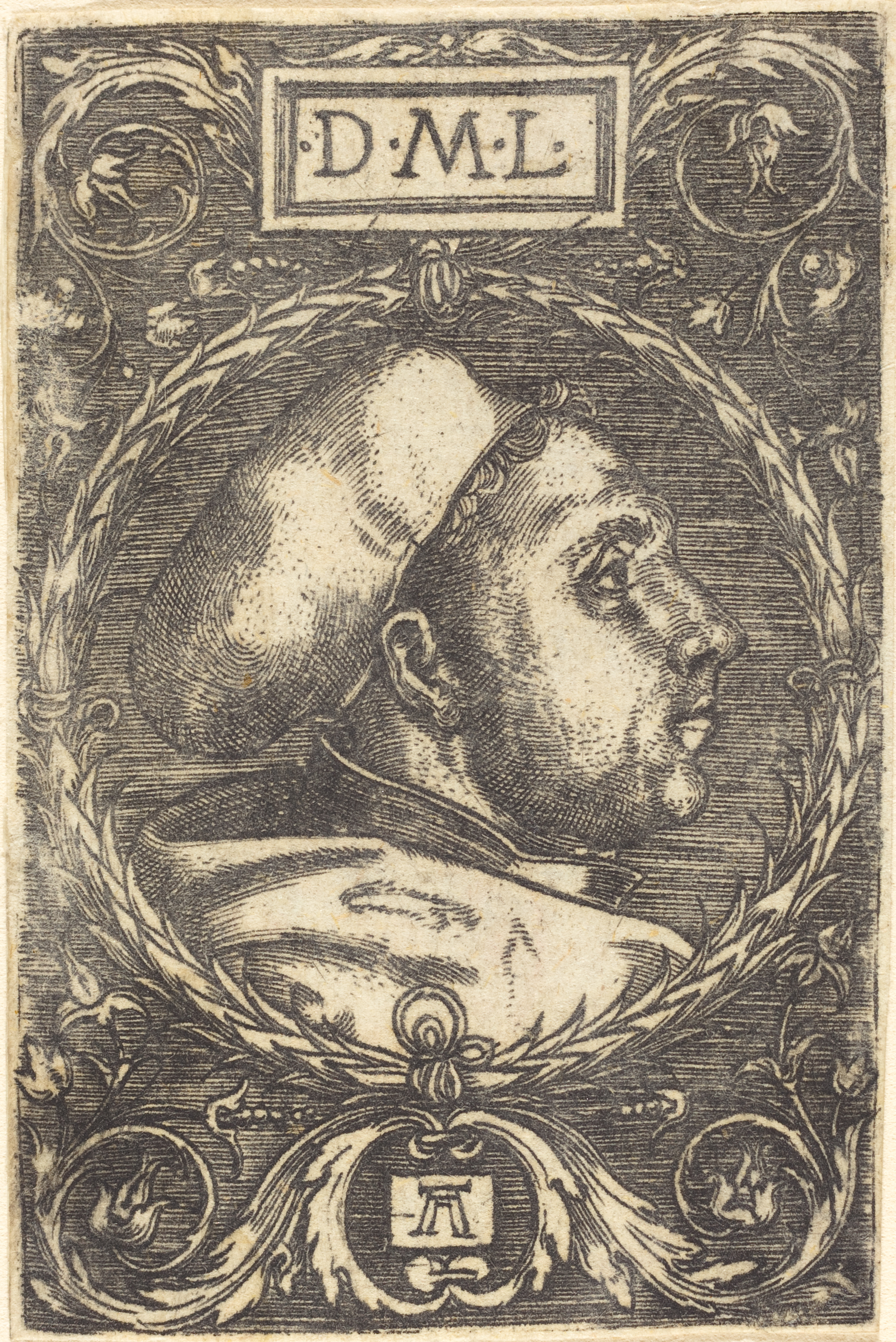
Luther went home, translated the Bible into German, and kept all seven books — every one of them, printed and bound inside his own 1534 Bible. Open that Bible and the seven books are there, in a section of their own between the Testaments, headed “Apocrypha: these are books not held equal to Holy Scripture, and yet useful and good to read.” Read that last part again: useful and good to read. Luther demoted the books. He did not delete them. That distinction matters enormously — it’s why the popular meme is wrong about the man it blames and wrong about the century it blames.
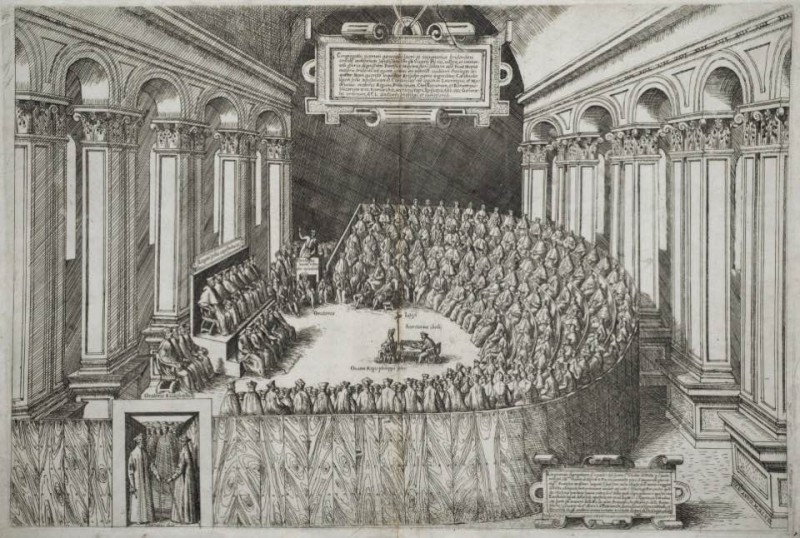
Rome did answer Leipzig eventually: 27 years later, at the Council of Trent, on April 8, 1546, Session Four declared the seven books “sacred and canonical, with all their parts, as they have been accustomed to be read in the churches.” Trent wasn’t writing a new list — it was pointing at eleven centuries of churches already reading those books. (Worth noting for honesty’s sake: the vote wasn’t a landslide. It was 24 in favor, 15 against, 16 abstaining. The 73 books stood anyway.)
So Luther kept them. Rome reaffirmed them. Then who, exactly, emptied them out of the Bible sitting on shelves today?
Who Actually Took the Seven Books Out?
The answer has a date, and it isn’t the 1500s. It’s 1826 — more than three hundred years after Leipzig. And it wasn’t a council, a pope, a reformer, or a theologian. It was a printing budget.
The British and Foreign Bible Society funded Bible printing across the English-speaking world. Between 1824 and 1826, the Society tore itself apart over one question: should its money keep paying to print the Apocrypha? History calls it the Apocrypha Controversy. It ended in 1826 with a “no” — the Society resolved to fund no Bible containing the Apocrypha, and to withhold money from any group that distributed them. Two years later, in 1828, the American Bible Society did the same. Follow the money and you get the modern 66-book Protestant Bible: not a doctrine, not a revelation, but two nineteenth-century funding bodies that stopped paying for seven books. Most Christians today have no idea the decision was ever made.
What’s Honestly Contested, and What’s in the Books
Honesty requires naming two things this video and article deliberately don’t lean on. First, there’s a famous quote where Luther supposedly said he wished the Book of Esther didn’t exist — it gets cited constantly in this argument, and it shouldn’t be, because Esther isn’t one of the seven deuterocanonical books; it never was. The line comes from Table Talk, notes taken by students and published after Luther’s death, and scholars dispute what it even means. Second, the exact wording Luther used at Leipzig survives only through later accounts of the debate record — what he did that day isn’t in doubt, but how he phrased it is, and a case this strong doesn’t need an embellished quote.
So what’s actually inside the seven books that made them worth fighting over? At minimum, the passage Eck opened that day in Leipzig: Scripture that shows the faithful praying for their dead. Remove 2 Maccabees and purgatory loses its clearest scriptural anchor — which is precisely why the objection got made in the first place. Seventy-three books for eleven hundred years. Moved to a back section in 1534. Gone entirely by 1826. Nobody voted on that last part. The Church never changed its answer.
If stories like this stay with you, fifty more are gathered in “Fifty Saints: Stories and Prayers for Divine Intervention” — available now.
Sources
- Tier 2: New Advent, “Canon of the Old Testament,” Catholic Encyclopedia — Hippo (393), Carthage (393/397/419), Pope Innocent I (405), the Vulgate, and medieval liturgical use of the deuterocanonical books.
- Tier 2: Council of Trent, Session IV decree (8 April 1546), full text via EWTN.
- Tier 2/3: the Leipzig Disputation (8 July 1519) and the Eck/2 Maccabees exchange, corroborated across independent historical sources; the exact phrasing Luther used is not verified word-for-word against the primary Latin debate record (Otto Seitz, 1903) and is treated in this piece as contested, not settled.
- Tier 3: the Apocrypha Controversy and the British and Foreign Bible Society’s 1826/1827 funding decision, followed by the American Bible Society in 1828 — the weakest single source consulted (a general encyclopedic account), used here only at year-level precision.
Image credits
- Leipziger Disputation 1519, Max Seliger (1865–1920), Stadtgeschichtliches Museum Leipzig. Public domain, via Wikimedia Commons.
- Martin Luther, Albrecht Altdorfer, c. 1525. National Gallery of Art, Open Access. CC0, via Wikimedia Commons.
- Concilio di Trento, 1563 engraving, artist unknown. Public domain, via Wikimedia Commons.