
You stand to pray. You listen to the readings. You say Amen. Around the year 155, a Christian wrote those things down for the Roman emperor. This article checks ten Mass habits against his letter and against the Church’s own documents, and gives each a verdict: mistake, not a mistake, or depends where you are. Two of the ten are things the internet calls mistakes and the Church does not. One gesture you make on Sunday is over a thousand years younger than the letter.
The Mass norms below follow the United States text of the General Instruction of the Roman Missal (GIRM) wherever they differ by country, and say so each time. Other countries have their own bishops’ conference norms, and this article does not claim to cover them.
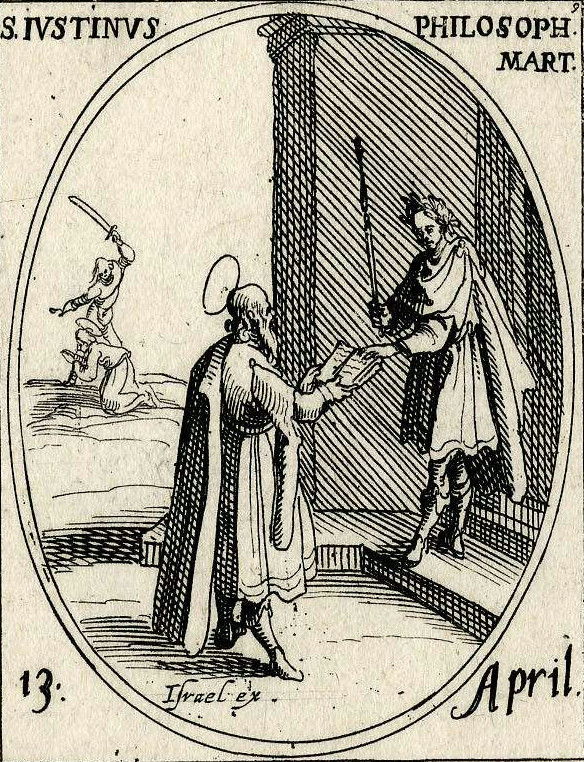
Who Wrote Your Sunday Down?
His name was Justin, a teacher who ran a free school in Rome. In his First Apology, written for the emperor Antoninus Pius, he walked through a Christian Sunday step by step. The Catechism of the Catholic Church calls his outline the basic lines of the Mass (CCC 1345) and says that they “have stayed the same until our own day for all the great liturgical families.” We quote Justin in the Ante-Nicene Fathers translation of Dods and Reith.
Mistake #1: Treating Sunday Mass as Optional
Justin writes that on the day called Sunday, all who live in cities or in the country gather together in one place. The obligation stands today: Sunday Mass, unless excused for a serious reason or dispensed by your pastor (CCC 2181). Illness counts, and so does caring for infants. But those who deliberately fail in this obligation commit a grave sin. A fever keeps you home with a clear conscience. A warm bed does not. Verdict: mistake.
Mistake #2: Treating the Readings as the Warm-Up
In Justin’s Sunday, the reading comes first, before any bread: the memoirs of the apostles or the writings of the prophets, read as long as time permits. The General Instruction says that when the Scriptures are read in the Church, God himself speaks to his people (GIRM 29), and it asks for silence after the readings and after the homily (GIRM 45). So fold the bulletin before the first reading. Verdict: mistake.
Mistake #3: Picking Your Own Posture
“Then we all rise together and pray,” writes Justin. In the early Church, standing was the posture of praise, and kneeling belonged to penitents. In 325, the Council of Nicaea ruled that on Sundays, prayer be made to God standing. The genuflection, one knee to the floor, has no claim to antiquity of origin, according to the 1909 Catholic Encyclopedia. It spread in the later Middle Ages. The older gesture was the profound bow. Today a genuflection means adoration of the Blessed Sacrament (GIRM 274).
On posture, the Instruction asks for one common posture, a sign of unity, rather than private inclination or arbitrary choice (GIRM 42). In the United States, that means kneeling from after the Holy, Holy, Holy until after the Amen that ends the Eucharistic Prayer. If health, space or a crowd keeps you standing, you make a profound bow when the priest genuflects (GIRM 43). Elsewhere, your bishops decide. When Monica asked Ambrose about fasting, he told her: “When I visit Rome, I fast on Saturday; when I am here, I do not fast” (Augustine, Letter 54). Verdict: depends where you are. The mistake is the private choice, not the knee.
Mistake #4: Turning the Sign of Peace Into a Social Break
In Justin’s Sunday, the kiss of peace came before the bread. Cyril of Jerusalem, around 350, echoes the Gospel: make peace first, then bring your gift. Rome kept it elsewhere, after the Our Father, just before Communion, and Pope Innocent I defended that place in 416. In today’s Roman Rite the meaning is different. Redemptionis Sacramentum (2004), paragraph 71, says this practice “does not have the connotation either of reconciliation or of a remission of sins, but instead signifies peace, communion and charity.” So offer it only to those nearest you, and soberly (GIRM 82). The priest stays in the sanctuary. Handshake, bow or nothing at all: your bishops’ conference sets the form. Verdict: the parade is a mistake. The form depends where you are.
Mistake #5: Barely Saying the Amen
Justin writes that “all the people present express their assent by saying Amen,” and then stops to translate the word for a pagan emperor: in Hebrew it means “so be it.” The Instruction gives that word to the whole church. The final doxology is confirmed and concluded by the people’s acclamation, Amen. So say it, or sing it, out loud. Verdict: mistake.
Mistake #6: Going Up Because the Whole Row Goes
Justin says no one is allowed to partake but the man who believes that the things which we teach are true, who has been washed (baptized), and who is “so living as Christ has enjoined” (First Apology 66). Canon law keeps that third condition: conscious of grave sin, you do not receive Communion without going to confession first (Canon 916), with a narrow exception for a grave reason, no chance to confess, an act of perfect contrition, and the resolve to confess as soon as possible. The Church encourages Communion at every Mass when properly disposed, and requires it at least once a year (CCC 1388-1389). Staying seated is allowed. Verdict: mistake.
Mistake #7: Ignoring the Eucharistic Fast
Justin never mentions a fast. Around the year 400, Augustine wrote to Januarius that, for the honour of so great a sacrament, “the body of the Lord should take the precedence of all other food entering the mouth of a Christian.” Today, canon law asks for at least one hour without food or drink before Communion (Canon 919). Water and medicine are exempt, and the elderly, the sick and those caring for them may receive even if they ate within the hour. The fast used to begin at midnight. Today it is one hour. Verdict: mistake.
Mistake #8: Calling Communion in the Hand a Modern Abuse
Here is Cyril of Jerusalem, around 350, teaching how to come forward: “Make your left hand a throne for the right, as for that which is to receive a King” (Mystagogical Catecheses 5.21, tr. Gifford). Then receive, saying Amen, and “lose no crumbs.” So that comment gets the history wrong: Communion in the hand is described by a fourth-century bishop, and his worry was the crumbs. In the United States, Communion in the hand is permitted. Redemptionis Sacramentum adds: where there is a risk of profanation, not in the hand (RS 92). Elsewhere it depends on your bishops. Verdict: not a mistake, where it is permitted.
Mistake #9: Judging Someone Who Kneels or Receives on the Tongue
The sources checked here do not say when kneeling for Communion and receiving on the tongue became custom, so this article gives no date. Each of the faithful always has the right to receive on the tongue (RS 92), and no one may be refused Communion for kneeling or for standing (RS 91; GIRM 160, U.S. text). In the United States the norm is standing, with a bow of the head before the Sacrament, and then your Amen. The Catechism asks your body to convey the respect, solemnity and joy of this moment when Christ becomes our guest. Kneel or stand, hand or tongue, none of it is showing off. Verdict: not a mistake. That makes two.
Mistake #10: Treating the Collection as a Ticket
Justin’s Sunday ends with the people who were not in the room. To those who are absent, a portion is sent by the deacons. Then the collection: “They who are well to do, and willing, give what each thinks fit.” It goes to the one presiding, who helps the orphans and widows, those in bonds, and the strangers among us. Since the beginning, Christians have brought, along with the bread and wine, gifts to share with those in need (CCC 1351). In Justin’s Sunday, the basket was how the Mass reached the widow, the prisoner and the stranger. Verdict: mistake.
What Happened to the Man Who Wrote It?
Look at the order again: the day, the readings, rising together, the kiss, the Amen, the bread, then the absent and the poor. The Mass ends by sending you out. An ancient sermon quoted in the Catechism (CCC 2178) puts it plainly: “Be present at the sacred and divine liturgy, conclude its prayer and do not leave before the dismissal.”
And the man who wrote it all down for the emperor was reported and, around 165, under Marcus Aurelius, beheaded. Would he recognize your Sunday? Almost all of it. The online fights, his three short chapters never mention. The widows and the absent, they do. That is a reading, and the Church does not rule on it. Next Sunday, stand, listen, say Amen, and stay until you are sent.
Which of the ten does your parish do differently? Tell us your country in the comments.
If stories like this one stay with you, there are fifty more in 50 Saints: Stories and Prayers for Divine Intervention — fifty lives from across the history of the Church, each paired with a prayer. Find it in the Catholic Journey shop.
Sources
- Tier 1: Catechism of the Catholic Church, 1345, 1351, 1385-1389 (vatican.va); 2178, 2181.
- Tier 1: General Instruction of the Roman Missal, paragraphs 29, 42, 43, 45, 82, 160-161, 274 (U.S. text where noted).
- Tier 1: Congregation for Divine Worship, Redemptionis Sacramentum, 2004, paragraphs 71, 91-92.
- Tier 1: Code of Canon Law, canons 916 and 919.
- Tier 2: St. Justin Martyr, First Apology, chapters 65-67, tr. Dods and Reith, Ante-Nicene Fathers vol. 1.
- Tier 2: St. Augustine, Letter 54, tr. Nicene and Post-Nicene Fathers, series 1, vol. 1; St. Cyril of Jerusalem, Mystagogical Catecheses 5.21, tr. Gifford, NPNF series 2, vol. 7.
Image credits
- Jacques Callot (published by Israël Henriet), etching of Justin Martyr presenting an open book to a Roman emperor, 1632-1635. Public domain, via Wikimedia Commons.