
The Letter That Wasn’t His
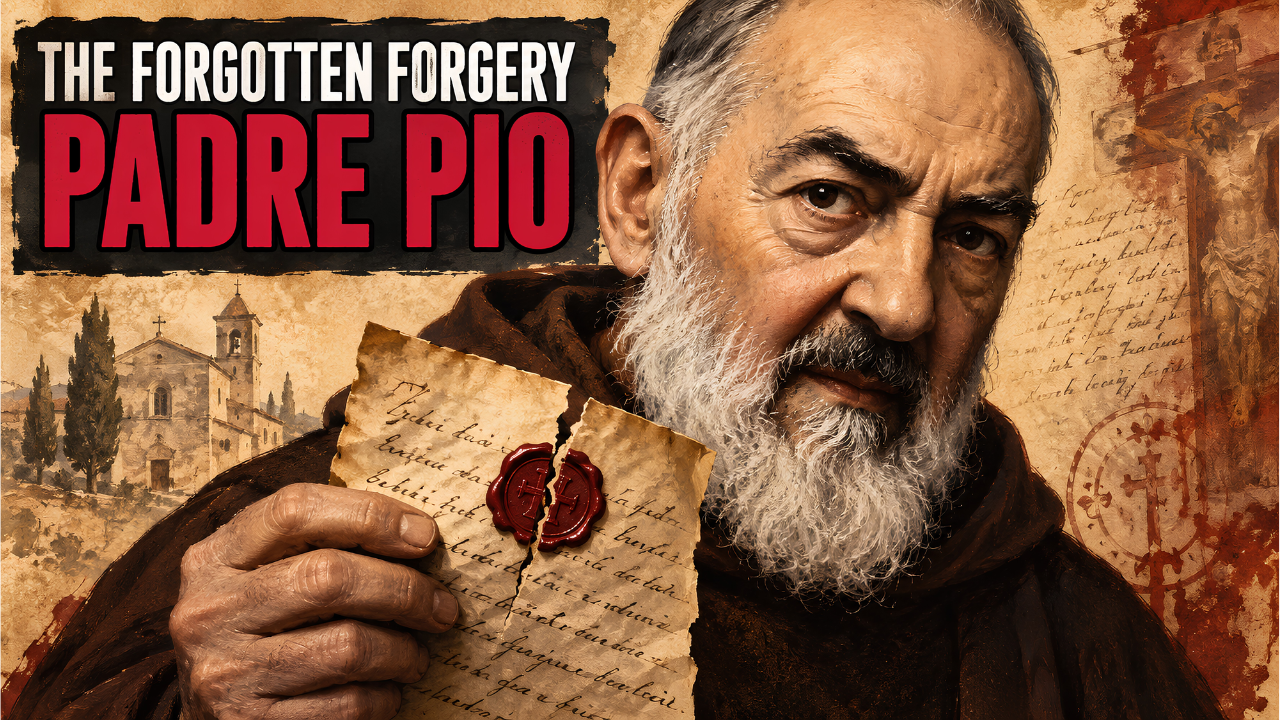
In 1950, a letter began circulating across Catholic Europe. It claimed that Padre Pio, the famous stigmatist friar, had predicted three days of total darkness were coming — a punishment so severe that no artificial light would work except one specific kind of candle.
Padre Pio denied writing a single word of it. He called it a forgery, meant to put his name on someone else’s warning.
But the prophecy did not start with him, and it did not end with him either. It started nearly a century earlier, with two women who never met.
Anna Maria Taigi’s Vision
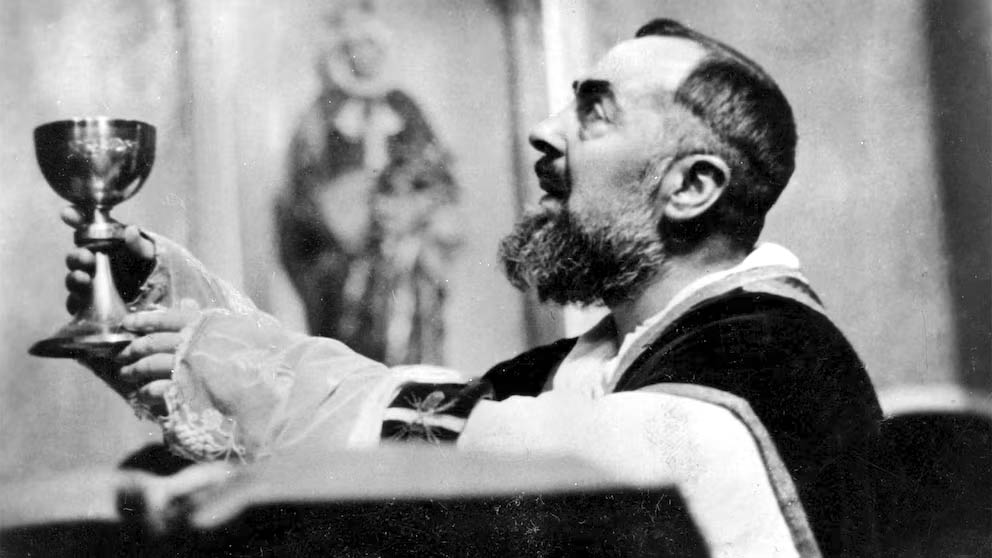
Anna Maria Taigi (1769–1837) was an ordinary wife and mother in Rome, not a nun, when she began experiencing visions that witnesses called extraordinary. She described a darkness that would cover the entire earth for three full days and nights. During that time, she said, the air itself would be poisoned, striking hardest at the enemies of religion, and no man-made light would work at all — except candles made from pure, blessed beeswax.
Taigi died in 1837 in relative obscurity. Eighty-three years later, in 1920, Pope Benedict XV beatified her — one step from formal sainthood. But beatification recognizes a holy life; it says nothing about which of a mystic’s private visions were literally true. Her darkness prophecy stayed a devotional rumor for decades, until another woman, in another country, described it again — this time with far more specific detail.
The Breton Stigmatist Adds a Calendar
Marie-Julie Jahenny (1850–1941) was a farm girl from La Fraudais, in Brittany, France. At twenty-three she received the stigmata — wounds echoing the crucifixion that would not heal. A doctor examined her under orders from her bishop and confirmed the wounds were real, not self-inflicted.
Jahenny did not just repeat Taigi’s warning. She specified a calendar: the darkness would fall on a Thursday, Friday, and Saturday. Anyone caught outside without a lit beeswax candle would face something like hell unleashed, she said — and the same candles would burn steadily through the darkness in one home while refusing to light at all in the house next door.
In 1875, her own bishop investigated her personally and wrote that she was “sincere” and that what she showed him was, in his judgment, supernatural. He died two years later. His successor did not agree — Jahenny was barred from receiving the sacraments for roughly eleven years, a dispute eventually reviewed under Pope Leo XIII around 1888. She was never formally condemned by the Church. She was also never formally approved. To this day, no single document settles whether her stigmata or her prophecies carry any Church-recognized weight.
The Forgery
That unresolved status is exactly why the prophecy could travel so far with so little oversight — through devotional pamphlets, then decades later through the internet, gathering new details with every retelling. By the twentieth century it had a life of its own, bigger than either woman who first described it. That made it the perfect target for someone who wanted instant credibility for a warning of their own.
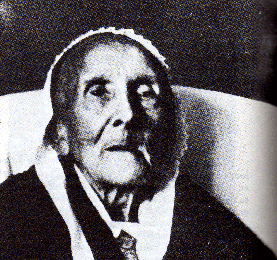
In 1950, a letter attributing the same three-days prophecy to Padre Pio began circulating. Researchers tracing it found its real origin: a fringe group in Germany called the Council of Heroldsbach, later outlawed by Church authorities for spreading false apparitions. Padre Pio’s own Capuchin superiors had placed him under strict obedience in 1924, forbidding him to write freely — meaning any prophetic letter attributed to him after that date could not have come from him at all. When asked about it directly, Padre Pio denied authorship outright. The Capuchin order and the Archdiocese of Bamberg have publicly denounced the letter as fake every year since 1950.
The most famous version of this prophecy — the one most people have actually heard — was never real.
What the Church Actually Says
Which raises the real question: what does the Church actually say about the Three Days of Darkness? Nothing, by name — and that silence is not an accident.
The Catechism of the Catholic Church addresses the category directly, in paragraph 67: private revelations never belong to the deposit of faith and cannot improve on what Christ revealed. No Catholic is required to believe in the Three Days of Darkness — not Taigi’s version, not Jahenny’s. The Church has also never denied it; Vatican documents simply don’t address it at all. That absence is exactly how the Church treats private revelation on principle: it is free to help believers live the Gospel more fully, and it is never binding.
Today the prophecy circulates mostly in traditionalist online circles, often stripped of the caution both women’s own stories deserve. One prophecy nearly a century old, one letter faked to borrow a saint’s name, and one Church that never ruled either way. The candles, the calendar, the darkness — none of it is Catholic doctrine. Not every warning wearing a saint’s face is telling the truth.
Image credits
- “Padre pio dando misa en italia 1944.jpg” — public domain, presumably by Federico Abresch, via Wikimedia Commons
- “Beata Anna Maria Taigi San Crisogono.jpg” — public domain, Carlo Raso, via Wikimedia Commons
- “Maria Julia Jahenny.gif” — public domain, unknown author, via Wikimedia Commons
Sources
- Tier 1: Catechism of the Catholic Church, §67 on private revelation (cited via Catholic Answers Q&A)
- Tier 3: Catholic Answers Magazine, “Will There Be Three Days of Darkness?” (Jimmy Akin)
- Tier 3: Catholicity.com, Marie-Julie Jahenny biographical FAQ
- Tier 3: Fr. John Zuhlsdorf, “Quaeritur: The Three Days of Darkness and You”
- Tier 3: Wikipedia, “Three Days of Darkness” (cross-check only, not primary)