
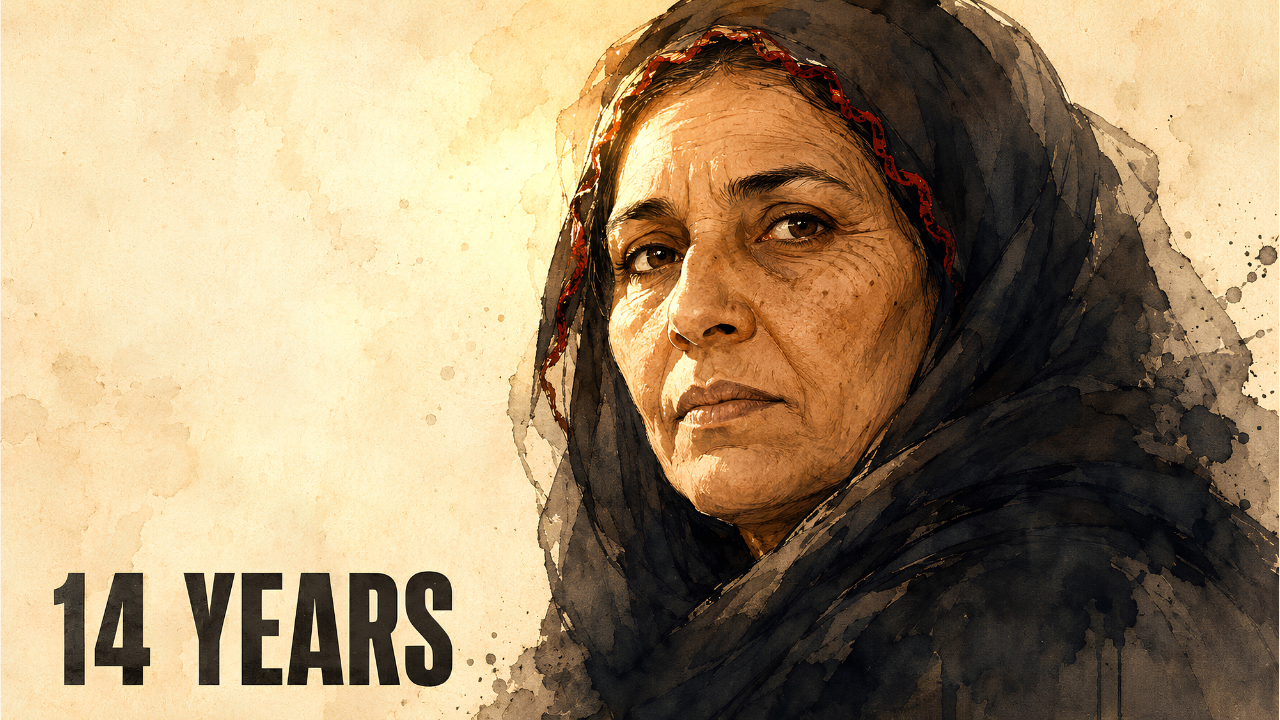
She is famous for a number Augustine never wrote
In a rented room at Ostia, the port of Rome, a woman of 56 lay dying a long way from the country where she was born. She told her two sons not to trouble themselves about where they buried her. Lay this body anywhere. Only remember me at the Lord’s altar, wherever you may be.
A few months earlier she had watched one of those sons baptized. His name was Augustine, and he would become the most influential theologian in the history of the Western Church. Hers was Monica.
You have probably heard that she prayed for him for 17 years. You have probably also heard that the famous line about her — the son of these tears shall not perish — was spoken by St. Ambrose of Milan. Neither of those is what the sources actually say, and the real version is better.

Who Monica was before she was anybody’s mother
She was born around the year 331 in Thagaste, a Roman town in North Africa, in what is now eastern Algeria. She was a Christian. Her husband Patricius was not — he was a pagan, quick-tempered, and by his own son’s account, unfaithful.
Augustine says his mother won her husband over by patience rather than argument. He never tells us her method. He tells us the result: Patricius was baptized shortly before he died, and his difficult mother, who lived in the same house, came around as well.
There is one more thing Augustine records about her that most retellings leave out, because it does not fit the statue. As a girl, sent to draw wine from the family cellar, she began secretly tasting it — a little more each time. Nobody noticed except a servant, who threw the word drunkard at her in the middle of an argument. Augustine says the insult did what no correction had managed. She stopped.
That is the woman we are talking about. Not a plaster saint. Someone who had already been broken of something before she ever had a son to worry about.
How she lost him
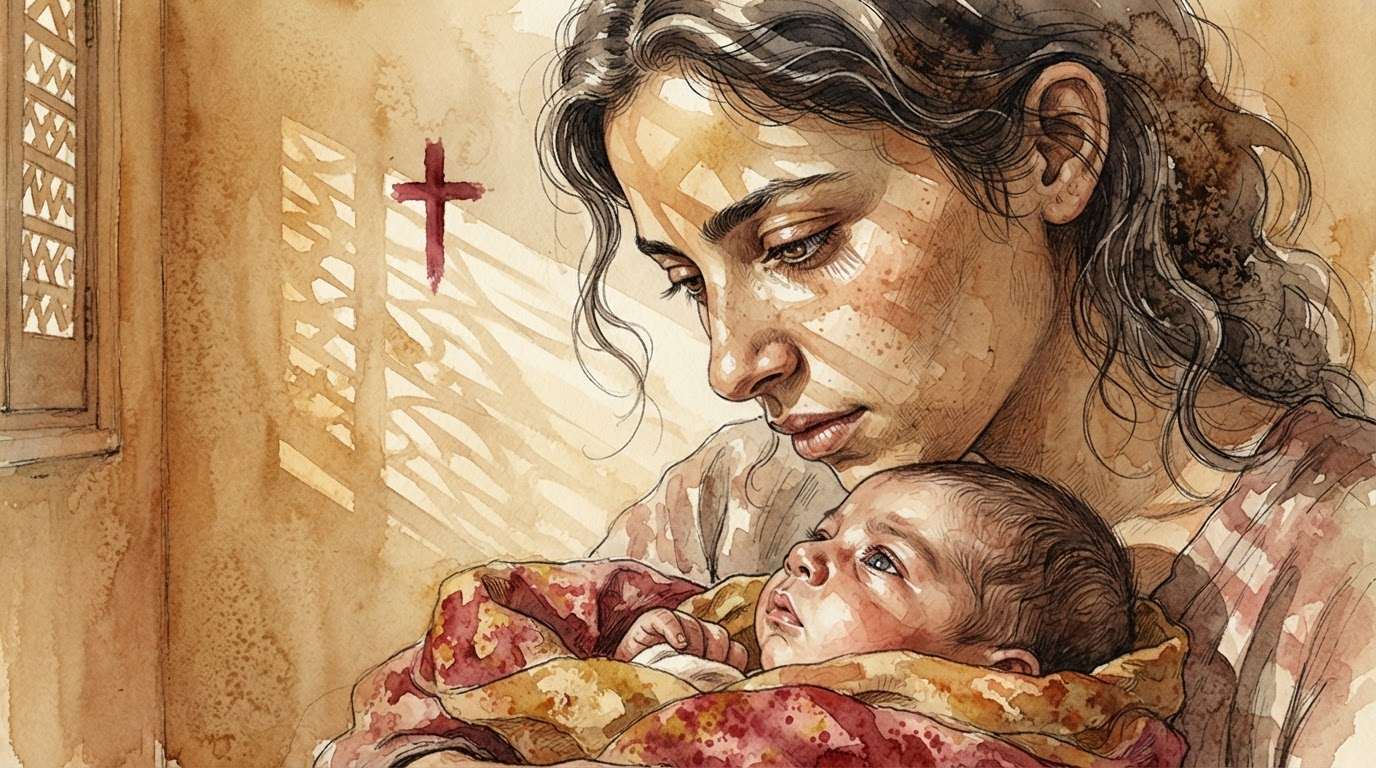
Augustine was born on 13 November 354. His mother gave him the name of Christ early; he would later write that he had drunk that name in with his mother’s milk. Then, at 19, he put it down.
Studying rhetoric at Carthage, he read a book by Cicero called the Hortensius. It changed what he wanted out of his life and turned him toward philosophy — but he noticed that the book never once mentioned Christ, and that absence unsettled him more than he expected. So he went looking.
What he found was not philosophy. It was the Manichaean religion, and it held him for the next nine years. Augustine is unusually precise about the span: from his nineteenth year to his twenty-eighth, roughly 373 to 382.
Hold on to that number, because it is the only running total Augustine ever gives in this whole story — and it is about his own error, not his mother’s prayers.
When he came home to Thagaste a Manichaean, Monica would not let him eat at her table. She put her own son out of the house. Then she had a dream: a shining young man asked her why she was grieving, and told her that where she stood, her son would be standing too. She woke convinced.
The promise — and who actually made it
Certain of the dream but unable to move her son, Monica went to a bishop in North Africa and begged him to sit down with Augustine and argue him out of his errors. The bishop refused. He told her that Augustine was not ready to listen, and that she should leave him alone and keep praying.
Then, worn down by her weeping, he said the line she would carry for the rest of her life: Go your way, and God bless you, for it is not possible that the son of these tears should perish.
This is the correction worth making. Almost every retelling of Monica’s life credits those words to St. Ambrose of Milan. Augustine puts them in Book III of the Confessions, in North Africa, around the year 373 — and he never names the bishop who said them. Ambrose does not enter this story for another 11 years, and at this point he is a thousand miles away.
The correction matters because of what it does to the timeline. The promise came early, and then nothing visible happened for a very long time. From that unnamed bishop’s words to the day Augustine was actually baptized is roughly 14 years.
Which brings us back to the number everyone repeats. The figure of “17 years” appears nowhere in the Confessions. Augustine never gives a total for his mother’s years of prayer. Working from his own dates, the defensible span is about 13 years from the bishop’s promise to the garden in Milan, or about 14 to the baptism. Seventeen is a later back-calculation, not something Augustine wrote.
The night he left her at the harbour
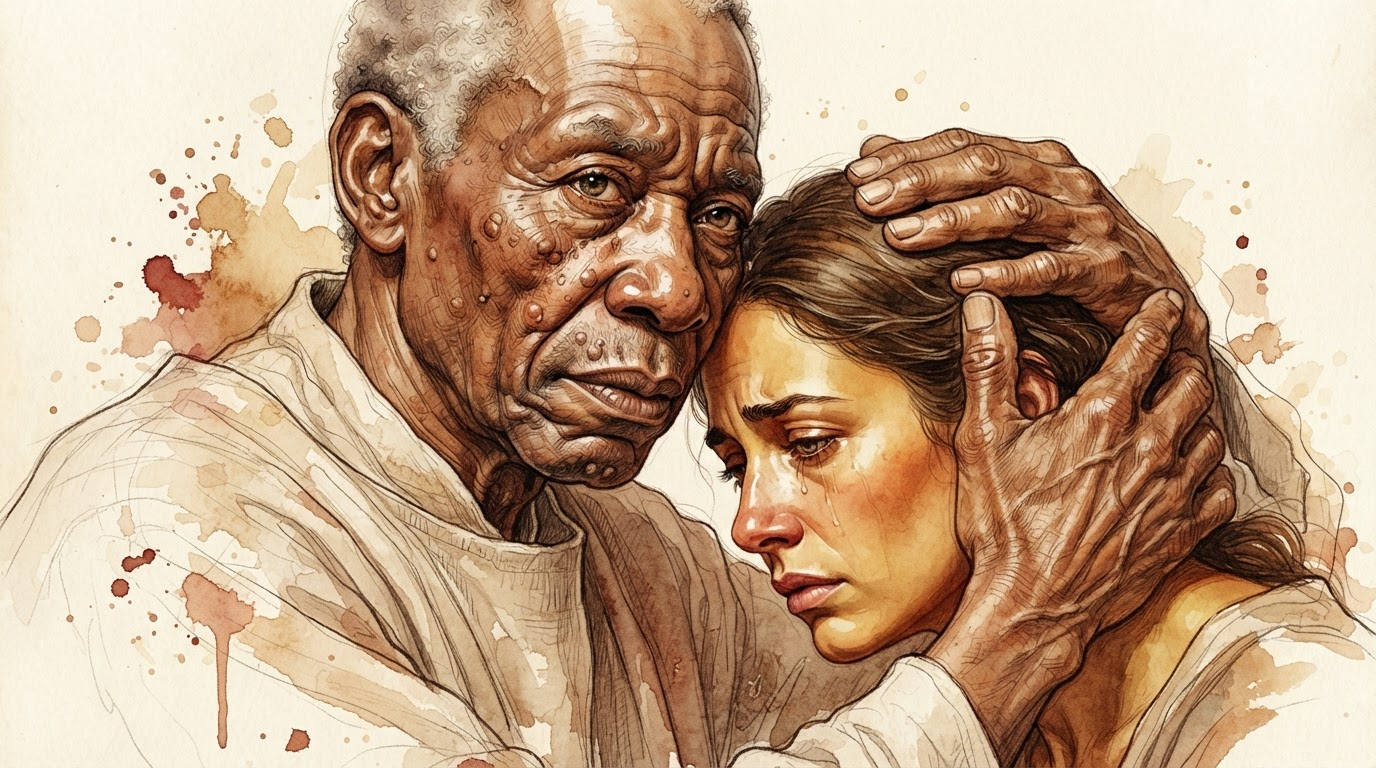
In 383, in what he calls his twenty-ninth year, Augustine decided to leave Africa for Rome to advance his teaching career. Monica would not hear of it. If he went, she went. She followed him down to the harbour at Carthage and refused to go home.
So he lied to her. He told her he was only seeing a friend off and waiting on the wind. She believed him, and spent that night praying at a shrine near the shore. While she prayed, her son’s ship sailed without her.
In the morning she was standing on the sand and he was gone. It is worth sitting with that image before moving on, because it is the honest middle of this story: 10 years after a bishop promised her that her son would not perish, every prayer she had made looked, that day, like nothing at all.
Milan, and the bishop who was not in the prophecy
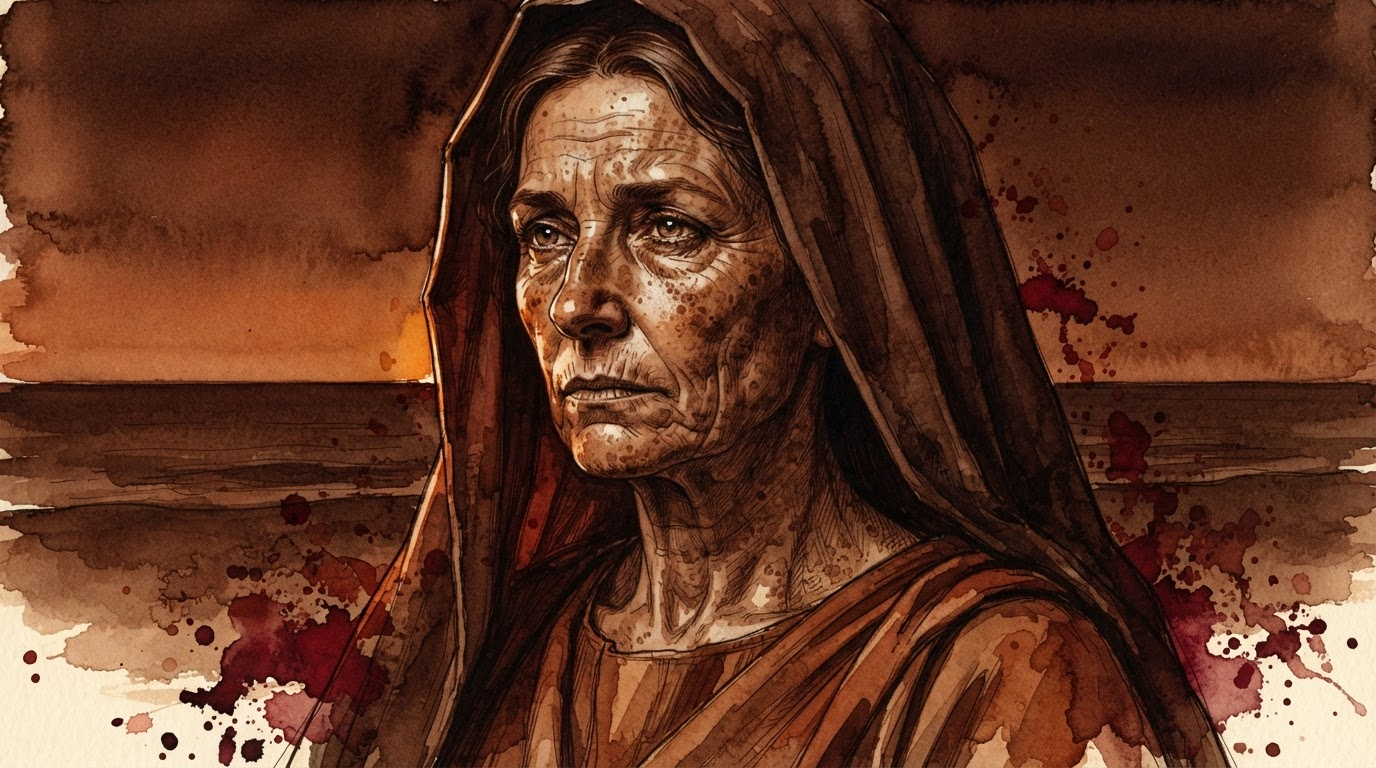
She did not go home. She boarded a ship herself and crossed to Italy, into a storm that frightened the sailors more than it frightened her — Augustine says she was the one reassuring the crew, because she had been promised safe arrival and she believed the promise.
By then Augustine had moved on from Rome. In 384 he took the imperial chair of rhetoric at Milan, the best appointment of his career. It also put him in the same city as the most formidable bishop in the West.
%20-%20WGA10295.jpg?width=1400)
Here is the part Augustine is honest about. He did not go to hear Ambrose preach because he wanted the faith. He went because Ambrose was a famous speaker and Augustine taught speaking for a living. He went to study the technique.
He went for the rhetoric and stayed for the argument. Objection after objection that he had carried for nine years came apart in that church. Monica arrived and attached herself to Ambrose’s congregation, and Augustine writes that she loved that man as an angel of God — not because Ambrose had converted her son, because he had not, yet, but because he had made her son unable to settle.
The garden
The deadlock broke when a visitor from Africa knocked on the door. His name was Ponticianus. He saw Paul’s letters lying on the table and started talking about a monk out in Egypt named Antony, a man who had heard one line of Scripture read aloud, walked out, and given away everything he owned.
Augustine listened to that and could not bear himself. He got up and went out into the garden, and his friend Alypius followed him. This was Milan, in the summer of 386. Augustine was 31, and by his own account he was coming apart.
Then he heard a child’s voice from beyond the wall, singing the same words over and over: tolle lege, tolle lege — take up and read. He went back to the table, opened Paul’s letters at random, and read the first passage his eyes landed on, from Romans 13: Put on the Lord Jesus Christ, and make no provision for the flesh. He read no further. He did not need to.
He went and told his mother. Augustine writes that she praised God, who is able to do more than we ask.

Ostia
On the night of 24–25 April 387, Ambrose baptized Augustine at the Easter Vigil in Milan, together with his son Adeodatus and his friend Alypius. He was 32 years old — 14 years after a bishop nobody can name told his mother to stop arguing and keep weeping.
They set out for Africa and got as far as Ostia, the port of Rome, where they stopped to wait for a ship. There, mother and son stood at a window looking over a garden and talked about what eternal life could possibly be. Augustine says that for one moment, together, they touched it. Then the conversation ended and they went back to waiting for the boat.
Five days later Monica took a fever. She died on the ninth day of her illness, at 56, and she never saw Africa again. She was buried at Ostia; in 1430 Pope Martin V had her relics translated to Rome, where they rest in the church of Sant’Agostino.
What the Church actually teaches about this
Monica’s story is often told as a formula: pray long enough, and God is obliged to say yes. The Catechism of the Catholic Church refuses that outright.
Treating the difficulty directly, it observes that some people stop praying because they believe their petition has not been heard (CCC 2734–2735), and it makes no promise about timelines. What it teaches instead is that God desires to do something greater for us while we cling to him in prayer, and that prayer conforms our will to God’s rather than the reverse (CCC 2737).
This is the difference between devotion and superstition, and it is worth being precise about. Monica was not owed her answer. She received one. What is asked of the rest of us is the holding on — not a guaranteed result on a schedule of our choosing. Inflating her years of prayer into an unverifiable number, as the popular version does, quietly turns a woman’s perseverance into a transaction. The real account is harder and better: she prayed through roughly 14 years in which nothing visible happened at all.

The feast of St. Monica falls on 27 August, and the feast of her son on 28 August — the two of them a day apart in the calendar, as they were in the end at Ostia.
Watch the full story
This article is the written companion to our video on Monica and Augustine. Watch it on the Catholic Journey channel.
Go deeper
If stories like this one stay with you, there are fifty more in 50 Saints: Stories and Prayers for Divine Intervention — fifty lives from across the history of the Church, each paired with a prayer. Find it in the Catholic Journey shop.
Sources
- Tier 1 (magisterial and primary): Augustine of Hippo, Confessions — Book III (the Hortensius; the dream; the unnamed bishop and the “son of these tears”), Book IV (the explicit nine years as a Manichaean), Book V (the secret departure from Carthage), Book VI (the crossing to Milan; Ambrose), Book VIII (the garden and tolle lege), Book IX (the baptism; the window at Ostia; Monica’s illness, words and death). Also Pope Benedict XVI, General Audience, 9 January 2008, for the dates of Augustine’s birth, conversion and baptism; and the Catechism of the Catholic Church, 2734–2737, on perseverance in prayer and filial trust.
- Tier 2 (scholarly/historical): New Advent, Catholic Encyclopedia, “St. Monica” — family, death and the translation of her relics; New Advent, Catholic Encyclopedia, “St. Augustine of Hippo” — the Manichaean period and the move to Milan.
A note on dates and numbers: Monica’s birth year is not given in the Confessions. Augustine states her age at death as 56 in 387, which places her birth around 331; the Catholic Encyclopedia gives 333, which does not quite fit his own arithmetic, so this article says “around 331” rather than asserting a precise year. The widely repeated “17 years of prayer” is not in the text at all, and is not used here.
Image credits
- Ary Scheffer, Saints Augustine and Monica, 1854 — public domain, via Wikimedia Commons.
- Benozzo Gozzoli, St. Augustine Departing for Milan (detail), 1464–1465, Sant’Agostino, San Gimignano — public domain, via Wikimedia Commons.
- Fra Angelico and workshop, The Conversion of St. Augustine, c. 1430s — public domain, via Wikimedia Commons.
- Ary Scheffer, Sainte Monique, by 1858 — public domain, via Wikimedia Commons.
- Three illustrations from the Catholic Journey video — original artwork.