
Join one Catholic order, and the pope can send you anywhere, at once. Join another, and you eat alone in your cell and talk on a weekly walk. This article puts ten Catholic religious orders on one ladder, from the most engaged with the world to the most withdrawn from it.
Two things before the list. No Vatican document ranks these orders, so this ordering is the channel’s own, not the Church’s. And some dates and figures are disputed between sources; where that happens, this article says so. Sizes carry the year they refer to. Daily-life details for the Passionists, Trappists and Carthusians come from early-1900s descriptions and are dated as such.
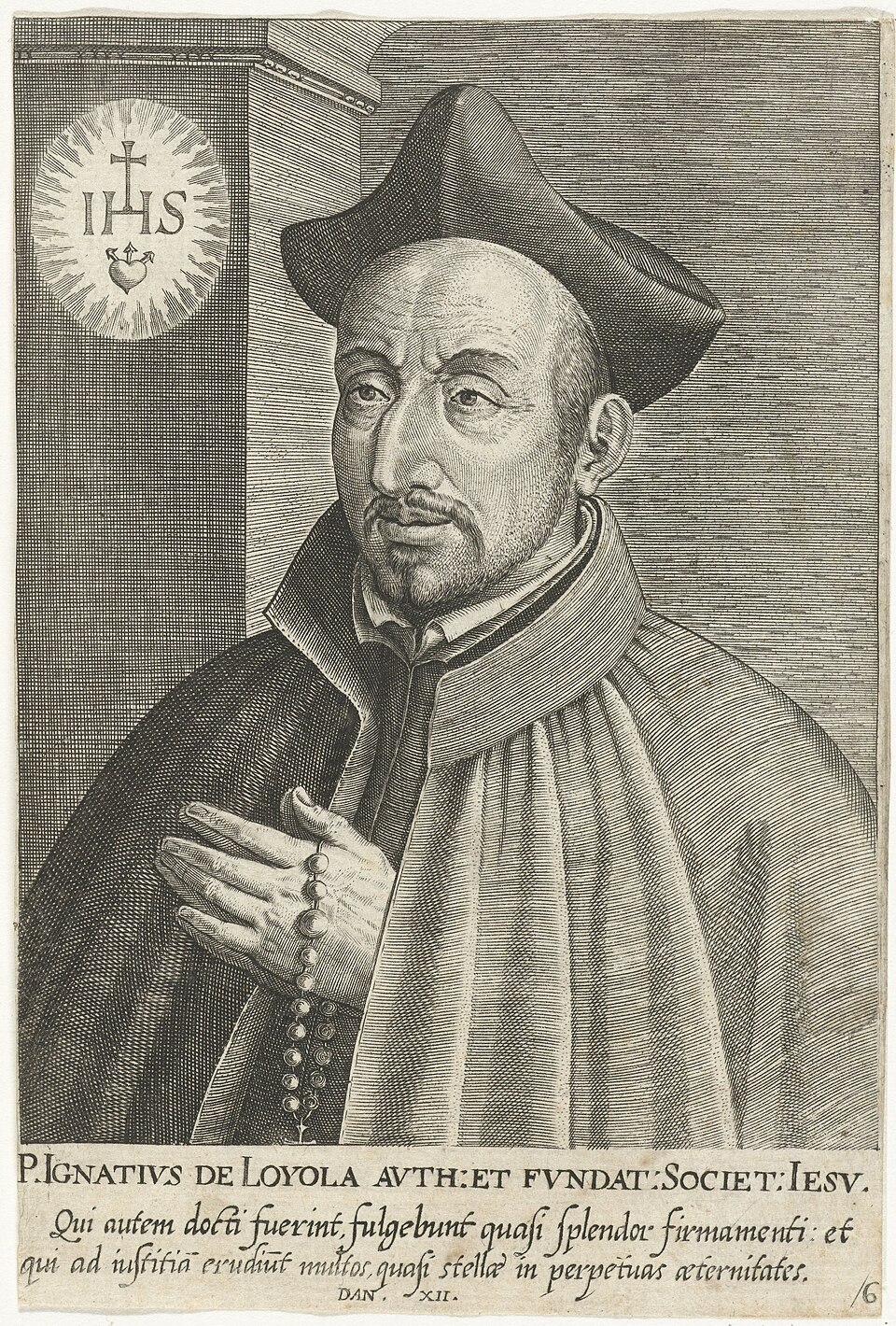
Level 1: The Jesuits, Sent Anywhere
The Society of Jesus, founded by Ignatius of Loyola, was approved by a papal bull on September 27, 1540. Jesuits vow perpetual poverty. The professed add a fourth vow: a special obedience to the pope about where they are sent on mission. Their Formula of 1550 says to go at once, without excuse, wherever the pope sends them. The Society was suppressed in 1773 and restored by Pius VII in 1814, 41 years later. It peaked at about 36,000 men in the mid-1960s; the 2025 figures show about 13,800.
Level 2: The Salesians, the Schoolyard
The Salesians of Don Bosco began in Turin on December 18, 1859, with 17 members by the usual count. Pius IX praised the group in 1864 and approved its Constitutions in 1874. Their work is schools and young people, with no extra vow. At the end of 2025, about 13,400 professed Salesians, in 138 countries, by their own count.
Level 3: The Franciscans, the Road
In 1209, Innocent III approved Francis of Assisi’s simple rule, by word of mouth only. The written rule followed in 1223, confirmed by Honorius III. Chapter VI reads: “Let the Friars appropriate nothing for themselves, neither house nor place, nor any thing.” Today the Franciscans are three separate orders. The Friars Minor alone counted about 12,000 men in the 2024 figures.
Level 4: The Dominicans, the Pulpit
Some lists online rank orders “from richest to most radical.” No order publishes its total assets, so nobody can check that ranking, and at least four of these ten have documented vows of poverty. The Order of Preachers is one of them. Dominic had about 16 friars when Honorius III approved the order on December 22, 1216; the sources disagree on which papal letter was the founding bull. Their purpose was preaching, and their main work was study. Thomas Aquinas was one of them. Convents lived on alms until 1475. About 5,400 men in the 2023 figures.
Level 5: The Camillians, the Sickbed
Camillus de Lellis, born in 1550, was a soldier who gambled until he was destitute. Abscesses in both feet tormented him for 46 years and kept him out of the Capuchins when he tried to join. He gathered men bound by vow to serve the plague-stricken. His community was approved in 1586 and made a religious order in 1591; the sources disagree on when it began. In the order’s first four centuries, more than 300 Camillians died serving plague victims. In 2000, John Paul II told their superior general that Camillians “have given their lives in service to victims of contagious diseases.” About 1,100 Camillians at the end of 2024.
Level 6: The Passionists, Where the Street Ends
The Passionists were founded by Paul of the Cross, born in Ovada in 1694. He wrote their Rule in December 1720, and Benedict XIV approved it in 1741. Besides poverty, chastity and obedience, Passionists take a fourth vow: to spread devotion to the Passion of Christ with all their strength. The first house was a small hermitage near the summit of Monte Argentario. In 1911, the Catholic Encyclopedia describes rising at midnight to pray and sleeping on straw beds; that has since been softened. About 1,760 Passionists in 341 houses at the end of 2024. (Paul of the Cross has his own post here on the blog.)
Level 7: The Benedictines, the Guest Door
Level seven is the oldest family on the list: monks living by the Rule of Saint Benedict, who founded Monte Cassino. The Rule sets aside about five hours of work a day, and a hemina of wine each, probably about half a pint. At the door, one rule for every stranger: “Let all guests who arrive be received like Christ” (chapter 53). By the early 1300s, an estimated 37,000 monasteries. The 2025 catalogue counts about 5,900 monks, without the novices and without the nuns, in nineteen congregations led by an Abbot Primate who is only first among equals.
Level 8: The Poor Clares, Nothing Owned
In 1212, on Francis’s advice, Clare withdrew to San Damiano. Members of her family soon joined her. She asked for a privilege: absolute poverty, not only for each sister but for the community itself. Gregory IX granted it in 1228. On August 9, 1253, days before she died, Innocent IV confirmed her own rule, in a bull that begins with the same words as the Franciscan rule of 1223: Solet annuere. Not every convent kept her poverty. No official count of Poor Clares turned up; the usual figure, roughly 20,000, is an estimate from around 2011.
Level 9: The Trappists, Hands at Work
The Trappists take their name from La Trappe, the abbey reformed by Armand-Jean de Rancé in the 1600s. The strict-observance congregations united under one abbot general in 1892, and Leo XIII confirmed the name in 1902. In 1912, the Catholic Encyclopedia described a day that began at two in the morning, with no meat, fish or eggs, and said: “It is never allowed for the religious to speak amongst themselves.” That is 1912, not necessarily today. About 1,400 Trappist monks in 82 houses at the end of 2024; about 1,300 nuns in 2023.
Level 10: The Carthusians, the Cell
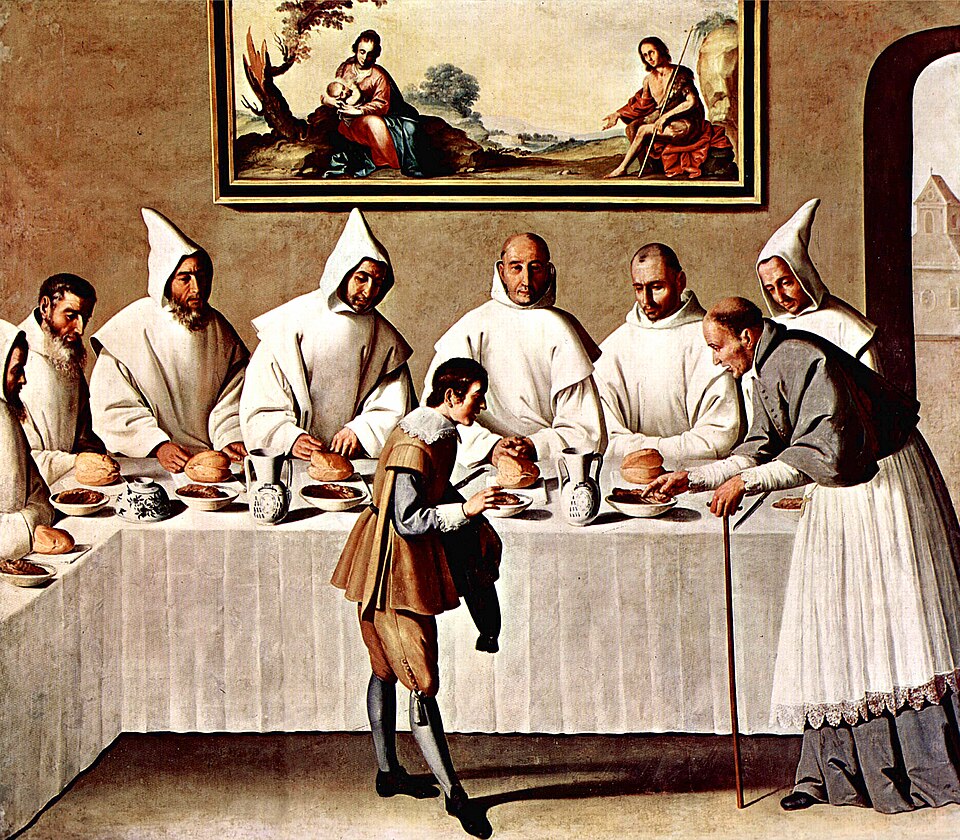
In 1084, a bishop settled Bruno and his companions in a wild place in the Alps near Grenoble, called Chartreuse. Bruno wrote no rule. Their customs were written down in 1127 by Guigo, the fifth prior, and approved by Innocent II. Since then, the order says, nothing has needed reform. In the early 1900s, each monk worked, slept and ate alone in his own cell around the cloister. At the end of 2022, the Vatican newspaper counted 288 monks and 63 nuns. In 2011, Benedict XVI prayed Vespers at Serra San Bruno, where Bruno died, and quoted the Carthusian motto: Stat crux dum volvitur orbis, “The Cross stands still while the world turns.”
Which Level Could You Live At?
You could be sent anywhere at once, or eat alone in your cell. The Church approved both, ten distances from the world. The order closest to the world was suppressed for 41 years. The one furthest from it has barely changed in over nine centuries. That is a reading, and the Church does not rule on it. Which level could you live at? Tell us in the comments.
If stories like this one stay with you, there are fifty more in 50 Saints: Stories and Prayers for Divine Intervention — fifty lives from across the history of the Church, each paired with a prayer. Find it in the Catholic Journey shop.
Sources
- Tier 1: John Paul II, Address to the Camillians, May 15, 2000 (vatican.va).
- Tier 1: Benedict XVI, Vespers at Serra San Bruno, October 9, 2011 (vatican.va).
- Tier 1: And in silence, the Carthusians grow, L’Osservatore Romano, June 2024 (Carthusian figures, end of 2022).
- Tier 2: Catholic Encyclopedia (New Advent): Passionists, and its entries on the Jesuits, Franciscans, Dominicans, Camillus de Lellis, the Rule of St. Benedict, the Poor Clares, the Trappists and the Carthusians.
- Tier 2: Rule of 1223 (Regula bullata), English edition on IntraText.
- Tier 3 (for size figures, each dated above): Jesuits Global; Salesian Bulletin; Benedictine Confederation; GCatholic.
Image credits
- Francisco de Zurbarán, Saint Hugh of Lincoln in the Refectory of the Carthusians. Public domain, via Wikimedia Commons.
- H. Ignatius van Loyola, from Icones Institutorum sex illustrium in Christiana religione ordinum, c. 1579-1615. Rijksmuseum, CC0, via Wikimedia Commons.