
On November 21 the Church celebrates the Memorial of the Presentation of the Blessed Virgin Mary. It is a feast about Mary as a child, and almost everything it commemorates comes from outside the Gospels.
Where the story comes from
The Catholic Encyclopedia says the Protoevangelium of James, the Gospel of Pseudo-Matthew, the Gospel of the Nativity of Mary and other apocryphal writings relate that Mary, “at the age of three,” was brought to the Temple “to be educated.” None of these is in the canonical Gospels, and we found no official Church statement on how historical the story is. The feast is about devotion, not about a recorded event.
How the feast grew
- East first. The Catholic Encyclopedia says the feast “originated in the Orient, probably in Syria.” The Menology of Basil II calls it the entrance of the Mother of God into the Temple.
- West later. Philippe de Mazières introduced it at Avignon, where it was celebrated before the cardinals in 1372. Paris followed in 1373.
- On and off. Pope Pius V removed it from the calendar. Sixtus V took it up again on September 1, 1585.
Why it matters
You do not have to settle the history to see what the feast says: Mary’s whole life, from childhood, belonged to God. In the Eastern churches the same day is kept as the Entrance of the Theotokos into the Temple.
One thing to do this week
Give one regular hour, a morning or a lunch break, to God this week, by prayer or silence, the way the feast pictures a child given to the Temple.
If stories like this one stay with you, there are fifty more in 50 Saints: Stories and Prayers for Divine Intervention — fifty lives from across the history of the Church, each paired with a prayer. Get the ebook. You can also browse everything else in the Catholic Journey shop.
Sources
- Catholic Encyclopedia, “Feast of the Presentation of the Blessed Virgin Mary” (Holweck, 1911).
Image credits
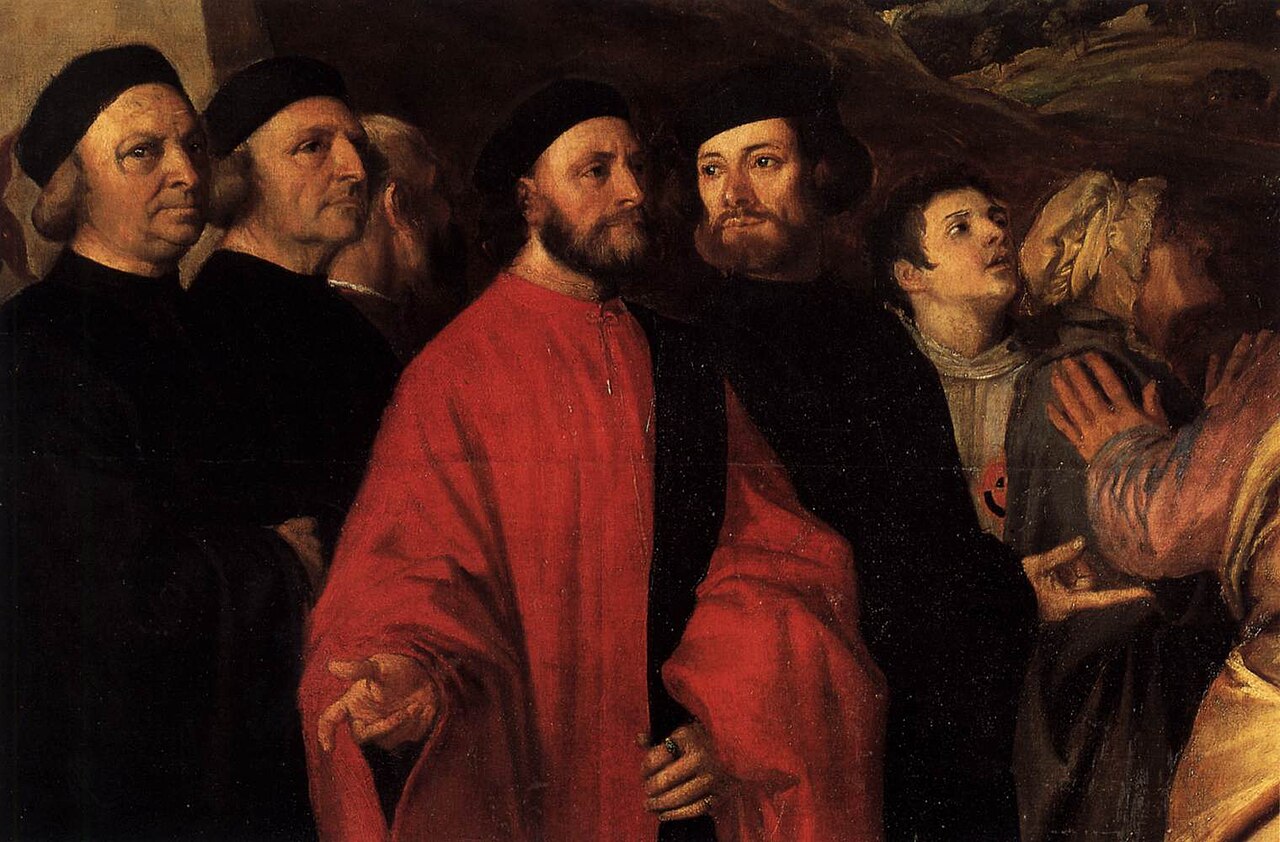
- Titian, Presentation of the Virgin at the Temple (detail), 1534-1538. Public domain, via Wikimedia Commons.